You get a text: “Birthday dinner Saturday, you coming?” You want to say yes. But you pause. Is “I’m in!” too casual? Is “I accept your kind invitation” too stiff? When accepting an invite, you want words that fit the moment, but you’re not sure which ones those are, so you just write “OK” and hit send. It works, but it doesn’t feel quite right.
By the end of this lesson, you’ll know exactly what to say when you accept an invite, whether it’s a friend’s text, a coworker’s dinner, or a formal business event email. You’ll have ready-to-use phrases for three situations: casual, semi-formal, and formal. You’ll also learn when to reply and how to handle special needs like a dietary restriction.
At Your Daily American, real social moments like this one are at the heart of every lesson. Instead of abstract grammar rules, you get phrases you can use today, with the cultural context that makes them land naturally.
Why your word choice matters when you accept an invite
In American social culture, how you accept is just as important as saying yes. A warm, enthusiastic reply shows you’re genuinely happy to come. Meanwhile, a flat or overly formal reply to a casual invite can feel cold, even if the words are technically correct. Americans generally prefer responses that match the energy of the invitation.
Three factors decide the right formality level. Your relationship with the host matters most: close friend, colleague, or professional contact? The type of event is equally telling: backyard BBQ, work dinner, or award ceremony? Finally, consider how the invite arrived: text message, work email, or a printed card? A simple rule to follow: close friend means casual; coworker or neighbor means semi-formal; professional contact or formal event means formal.
A very common ESL mistake is using “I would like to accept your invitation” in a casual context. It sounds rehearsed rather than natural. Native speakers rarely say that to a friend. The goal is to sound like yourself, just in the right register, the level of formality a situation calls for.
Casual phrases to say yes to a friend or family invite
For texts and group chats with people you know well, keep it short and enthusiastic. Here are eight phrases that sound completely natural:
- “I’m in!”, a common short acceptance among friends
- “Count me in!”, slightly more enthusiastic, great for group chats
- “Sounds fun!”, works well when someone proposes a specific plan
- “I’ll be there!”, clear and simple, works for any casual event
- “Definitely!”, quick, confident, no room for doubt
- “I’m down!”, a very American casual phrase meaning “yes, I want to do this”
- “Can’t wait!”, shows excitement; use when you’re genuinely looking forward to the event
- “I’ll be there for sure!”, adds a bit more commitment than “I’ll be there”
See how these look in a real text conversation:
Friend: “Hey! BBQ at my place Saturday at 4. You coming?”
You: “I’m in! Should I bring anything?”
Notice what makes this work. You say yes clearly and immediately, then add a natural follow-up question. That shows you’re genuinely planning to attend, not just being polite. You may also come across the phrase “I’ll be there with bells on!” in American English. It means “I’ll definitely be there and I’m excited,” but save it for holiday events or very close friendships. It’s a fun expression, though it sounds odd in everyday situations.
Semi-formal phrases for colleagues and acquaintances
The middle register trips up most ESL learners. You need to be warm, but you also need to sound professional. Slang is too casual, and stiff phrases cross into formal territory. These five phrases strike the right balance:
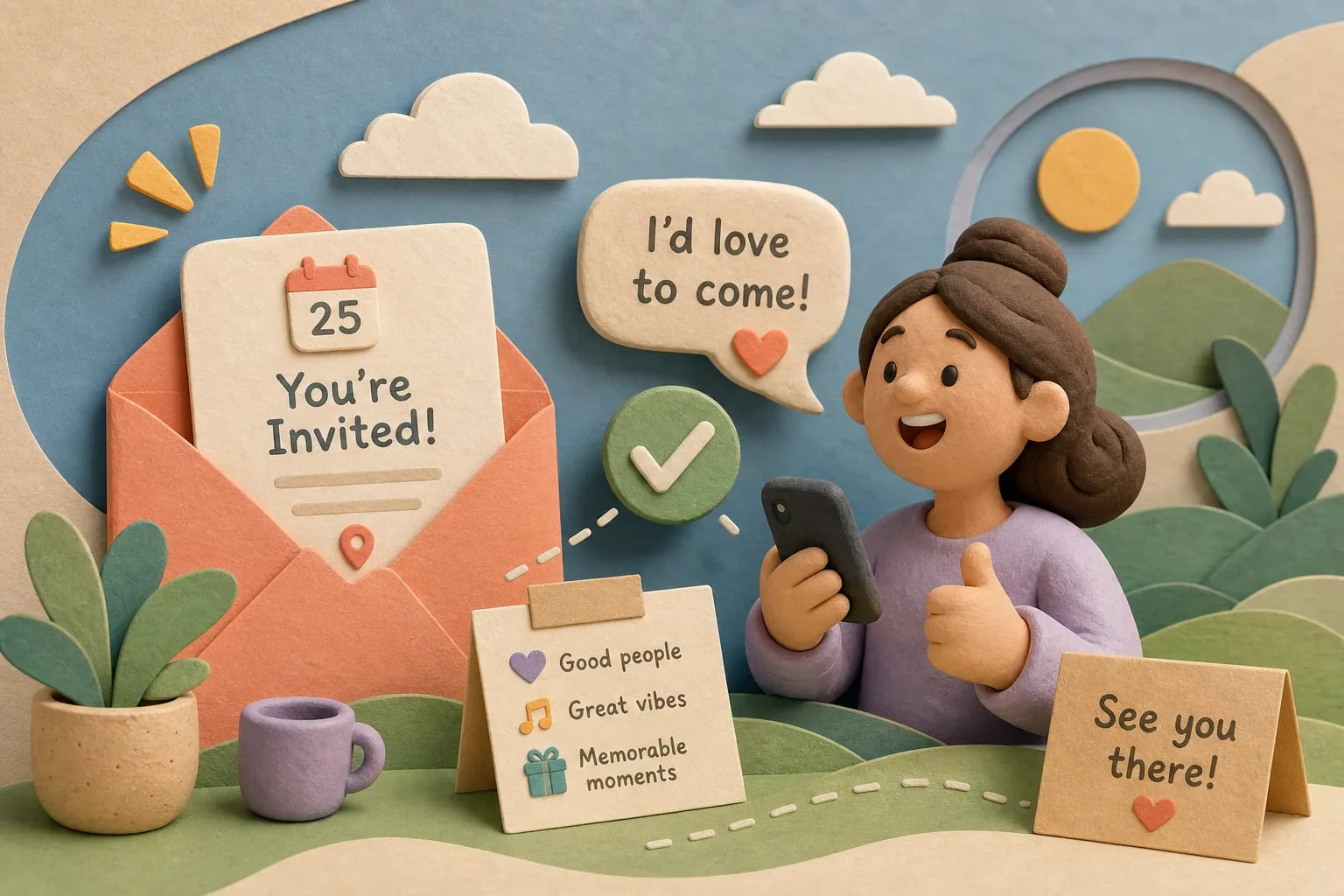
- “I’d love to come, thanks for including me!”
- “That sounds great, I’ll be there!”
- “Thanks so much for the invite, I’m looking forward to it.”
- “I’d love to join you.”
- “I’ll definitely make it, thanks for thinking of me.”
Two things separate these from casual phrases: they include a thank you, and they drop the slang. They differ from formal phrases because there’s no stiff grammar like “I am pleased to confirm.” They sound like a real person speaking warmly, exactly right for a colleague or a neighbor you don’t know very well.
Here’s a short example from a work messaging app:
Colleague: “A few of us are getting dinner Friday after work, want to come?”
You: “I’d love to, thanks for including me! What time are you thinking?”
The phrase “thanks for including me” is a warm, native-sounding touch that many ESL learners overlook. It signals to your colleague that you noticed the invitation was personal. Confirming a detail at the end, like the time, also shows you’re genuinely planning to be there.
Accepting a professional or formal invitation
For business events, conferences, or formal dinners, you’ll usually reply by email. Keep the message short and professional.
Email template
Here is a template you can copy and customize:
Subject: RSVP, [Event Name]
“Thank you for the invitation to [Event Name] on [Date]. I’m pleased to confirm I’ll be attending. Please let me know if there’s anything I can do to help with preparations. Looking forward to it. Best regards, [Name]”
Each part of this email does specific work. Naming the event and date shows you read the invitation carefully and confirms you have the right details. “I’m pleased to confirm” is the standard professional phrase for a formal acceptance, clear and direct. “Looking forward to it” closes the email on a warm note without tipping into casual territory. Two to three sentences is plenty; adding more can dilute the professional tone.
For more professional examples, see these RSVP email templates you can adapt for conferences and business events.
Spoken acceptance
For spoken formal situations, accepting face-to-face at a professional event or over the phone, try this: “Thank you very much for the invitation to [Event Name] on [Date]. I’d be honored to attend.” Notice that even in formal spoken American English, contractions like “I’d” are natural and expected. Phrasing like “I am most honored to accept” can sound stiff or old-fashioned in most modern contexts. Always restate the event name and date when you accept, especially over the phone, so both you and the host know you have the right information.
RSVP etiquette: when and how to respond
RSVP comes from the French phrase répondez s’il vous plaît, but in American English it simply means “please reply.” That connection between the original meaning and everyday use explains why the 24-hour rule exists: a prompt reply lets the host plan. The general guideline is to respond within 24 hours for most invitations. For formal events with a stated deadline, a wedding or a conference, for example, reply as soon as you know you can attend, and always before the given deadline. For sample replies and wording ideas, check these RSVP response examples.
Timing matters because hosts need to plan food, seating, and logistics. A late reply makes their job harder. Failing to reply at all is considered impolite in the U.S., even among friends, a quick “no” is always better than silence. Wedding planning guides also explain why it’s helpful to reply early, read more about when guests should RSVP for a wedding.
When you accept, it’s natural to confirm one detail, especially for informal events. For example: “So I’ll see you Saturday at 4, right?” Offering to bring something is also a standard American social gesture. Say: “Is there anything I can bring?” or “Can I bring a dish?” For formal professional events, skip the food offer and use: “Please let me know if there’s anything I can do to help.”
Accepting an invite when you have a special need
Sometimes you want to say yes, but you need to mention a dietary restriction, a timing issue, or an accessibility question. The key is simple: accept first, then add your need. This keeps the conversation positive and avoids sounding like a complaint.
Compare these two approaches:
Unclear order: “I have a gluten allergy, so I’m not sure if I can come, but maybe yes.”
Better order: “I’d love to come! I do have a gluten allergy, is that something you can work around? I’m happy to bring my own dish if it’s easier.”
The second version leads with enthusiasm and then makes the request clearly. A few more phrases for specific situations:
- Dietary: “I’d love to come! Just a heads up, I’m vegetarian. I’ll figure something out, but wanted to let you know.” Read etiquette tips on how to share your dietary restrictions with your RSVP.
- Timing: “I’m in! I may arrive about 30 minutes late, is that okay?”
- Accessibility: “I’d love to come. Quick question: is the venue wheelchair accessible? Just want to confirm before I RSVP.”
The most important rule: tell the host early, not the day of the event. A short message sent in advance gives them time to plan. Waiting until you arrive puts everyone in an uncomfortable spot.
Put it into practice
Accepting an invite in American English comes down to one skill: matching your language to the situation. A quick “I’m in!” works perfectly in a text. “I’d love to, thanks for including me!” fits a colleague’s dinner. A polished three-sentence email handles a formal event. Each register has its own rhythm, and now you know how each one works.
Try this: pick one phrase from each register, casual, semi-formal, formal, and write it somewhere you’ll see it. The next time an invitation comes in, you’ll have the right words ready before you even start typing.
If you want to keep building this kind of real-life social English, Your Daily American covers more moments just like this one: 25 Small Talk Phrases Americans Use Every Day, Your Daily American, politely saying no, 20+ Ways to Say Thank You in American English, and navigating 75 American English Phrases for ESL Beginners. Every lesson gives you phrases you can use right away, with the cultural context that makes them feel natural.