You know the word “no.” You have known it since your first English lesson. But when a coworker asks you to cover their shift, or a friend invites you to an event you really don’t want to attend, you freeze. The problem is not vocabulary. The problem is knowing which phrase fits the moment, and how to say it without sounding cold or rude. This guide walks you through practical ways to say no in American English so you can refuse clearly, without feeling rude or awkward.
American English has many ways to refuse politely, and each one fits a different situation. A casual “I’ll have to pass” works great with friends. A firm “That doesn’t work with my current deadlines” is better for the office. By the end of this lesson, you will have specific phrases for three different situations, ready-to-copy scripts for email and text, and three practical steps to handle the guilt that often follows a refusal. This is exactly the kind of real-world English that Your Daily American is built around: the words and phrases native speakers reach for automatically.
Why saying no feels so hard in American English
Feeling uncomfortable when you refuse someone is not unique to English learners. Native speakers struggle with it too. The discomfort usually comes from a belief that refusing a request means hurting the other person or being selfish. Psychologists have noted that this feeling is often a sign of empathy, it does not mean the refusal was wrong.
There is also a cultural layer to understand. American English uses a style that is direct but warm. Americans value honesty and clear communication, and a well-phrased refusal is seen as respectful, not harsh. Interestingly, over-apologizing or giving a long excuse can make things more awkward, not less. Piling on too many “I’m sorry” phrases can actually make the other person feel worse. A clear, brief response works better.
The cultural code behind an American refusal
Americans generally follow a simple pattern when they say no: a short acknowledgment, a brief reason, and sometimes an alternative. They do not expect or need a long explanation. One sentence is usually enough. “I’m at capacity right now” is a complete and acceptable answer in many professional situations. If you want to practice concise responses, see our short answers in English for more one-sentence examples.
What happens when learners avoid saying no
When you always say yes, two things happen. First, you take on more than you can handle. Second, you start to feel frustrated or resentful. Over time, this also affects how confident you sound. Learning to refuse clearly is a communication skill, not a social risk. It actually builds trust and respect.
Casual ways to say no with friends and in everyday life
With friends and in relaxed situations, your language should feel natural and easy, not formal. These are the phrases Americans send in texts, say at gatherings, and use in group chats. The goal is to sound warm while being honest about your availability, in other words, everyday ways to say no that don’t create drama.
Here are the most common casual decline-an-invitation phrases, with the situation each one fits best:
- “I’ll have to pass this time.”, Great for any social invitation.
- “I’m going to sit this one out.”, Good for group activities or events.
- “I’m not up for it, but have fun!”, Warm and friendly; works when you want to show you still care.
- “Thanks for thinking of me, but I can’t make it.”, Polite and complete on its own.
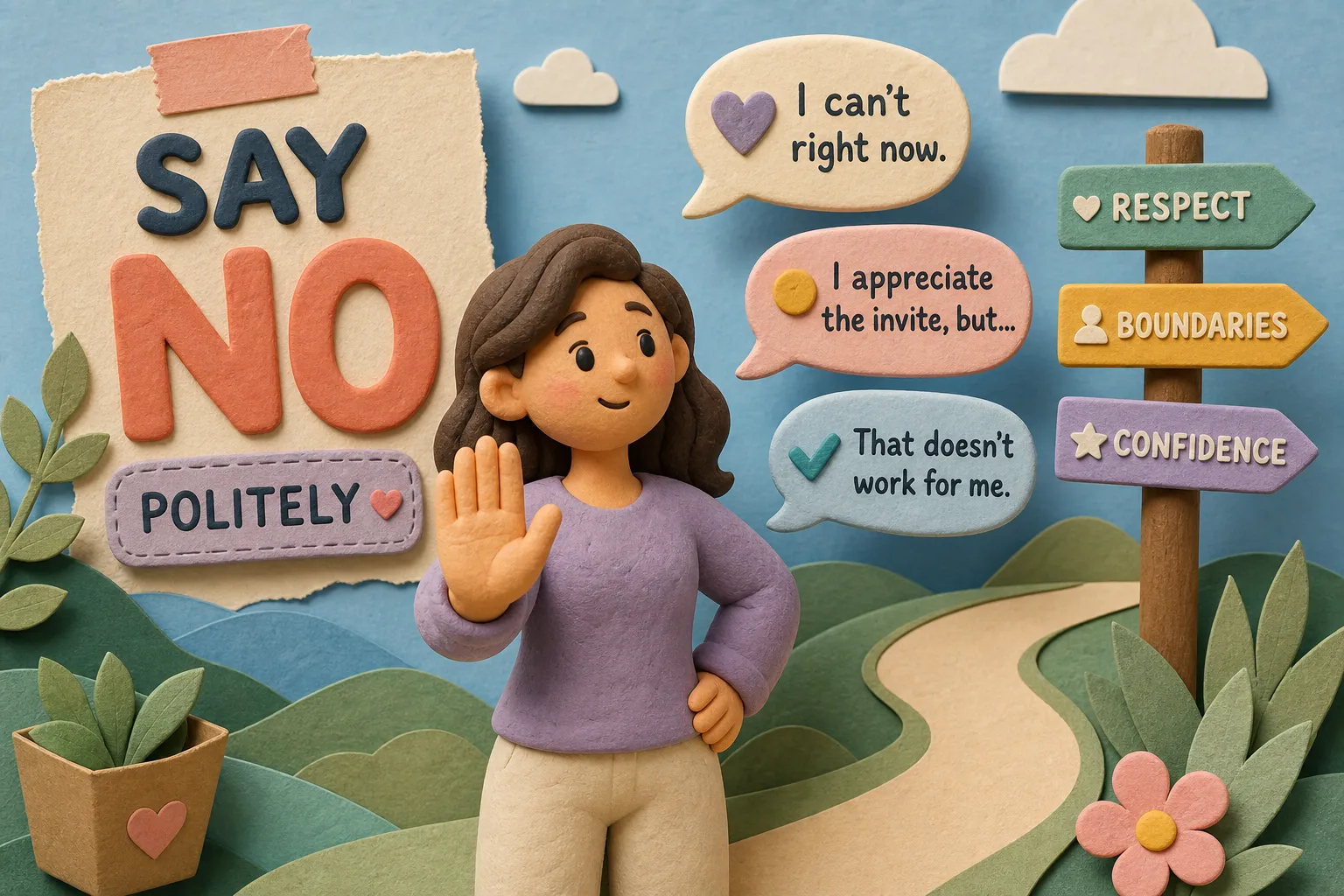
- “That doesn’t really work for me.”, Calm and simple, no explanation needed.
- “Can I take a raincheck?”, Suggests you want to do it another time. (“Raincheck” means asking to reschedule for later.)
If you need wording for declining more formal invitations (for example, a role in a wedding party), Time’s guide on how to decline a wedding-party invitation offers tactful examples that translate well to other formal RSVP situations.
Short phrases for texts and quick replies
In a text conversation, a short warm reply is more natural than a long paragraph. Here is an example:
Friend: “Hey, we’re going bowling tonight. You in?”
You: “Thanks for the invite! I’ll sit this one out, but have a great time.”
That is two sentences. It is friendly, it is clear, and it is done, no explanation needed.
How tone changes the message
Compare these two responses to the same invitation:
Cold version: “No, I can’t go.”
Warm version: “Thanks for thinking of me, but I can’t make it. Next time!”
The words “thanks for thinking of me” and “next time” cost you nothing. They tell the other person that you value them, even if you can’t be there. That small addition makes a big difference. For more brief conversational additions and natural pauses, check our guide to common filler phrases that learners use to sound more native.
Polite ways to say no at work
Refusing a request at work is one of the most stressful situations for intermediate learners. The fear of damaging a relationship or seeming difficult is real. The good news is that American workplace culture actually respects clear, professional communication. Declining when you are at capacity is both acceptable and professional. Indeed’s practical guide on how to say no to your boss includes helpful scripts and reminders that reinforce the “acknowledge + reason + alternative” approach.
The basic formula is: acknowledge the request + give a brief reason + offer an alternative or ask for guidance. Here are the key assertive refusal phrases to keep in your toolkit:
- “I appreciate you asking, but I’m at capacity right now.”
- “I’m not able to take that on, but [colleague’s name] might be able to help.”
- “That doesn’t work with my current deadlines.”
- “I’m not able to commit to this right now.”
Saying no to a colleague’s request
Imagine a coworker asks you on Friday afternoon to help with a project that is due Monday. You already have your own work to finish. Here is what you can say:
“I appreciate you asking, but I’m not able to help this weekend. I’m finishing my own deadlines. Let me know if you need something smaller, or maybe [name] has more availability right now.”
This response is honest, it offers a path forward, and it protects the relationship.
How to say no to a boss without sounding difficult
When a manager asks you to add more work to an already full schedule, use the “prioritization redirect” technique. Instead of a flat refusal, you ask your manager which task to move so the new one fits. This shows you are a team player while being honest about your limits.
Script 1: “I want to make sure this gets done well. I’m currently focused on [Project A] and [Project B]. Which one should I pause to take this on?”
Script 2: “I appreciate you thinking of me. I’m at capacity right now, but I can take this on after [date] if that works.”
Both scripts are firm and respectful. They give your manager information and invite a real solution.
Ways to say no: email and text templates you can copy right now
Written refusals give you more time to choose your words carefully. The same rules apply: be clear, be brief, and stay warm. Three sentences is enough for most professional emails.
Three email templates for common situations
Template 1: Declining extra work
Subject: Re: [Project Name]
Hi [Name],
Thank you for thinking of me. I’m not able to take this on right now due to my current workload. I appreciate your understanding.
Best,
[Your Name]
Template 2: Saying no to a vendor or outside contact
Hi [Name],
Thanks for reaching out. I have to decline, but I appreciate the opportunity.
Best regards,
[Your Name]
Template 3: Leaving the door open
Hi [Name],
Thank you for reaching out. I’m not able to help with this right now, but I’d be happy to reconnect if things change.
Best,
[Your Name]
For short, shareable invitation decline messages and visual examples you can adapt for text or email, see these decline message templates that include polite phrasing and layout ideas.
Quick text templates that sound natural
Texts should be shorter than emails. One or two sentences is the right length. Here are two options depending on your comfort level:
Firm but warm: “Thanks for thinking of me. I’m not able to help with this right now, but I appreciate you reaching out.”
Brief and direct: “Thanks for asking, but I can’t do that right now.”
Both are complete. Both are polite. Choose the one that fits your relationship with the person.
Three simple techniques to stop feeling guilty
The guilt after saying no is predictable. It does not mean you did something wrong. It often means you are breaking an old habit of always agreeing. Here are three concrete steps to work through it.
Reframe the refusal as a boundary, not a rejection
Saying no to a request is not saying no to the person. You are protecting your time and energy, not pushing someone away. When the guilt shows up, repeat this sentence to yourself: “I said no to the task, not to the relationship.” That simple separation reduces a lot of the discomfort. If you need guidance on letting go after a refusal, PsychCentral’s piece on saying no kindly and letting go has practical tips to help you move on.
Start with small refusals to build confidence
The discomfort of saying no gets smaller with practice. This week, say no to one small, low-stakes request each day. Say no to a second coffee you don’t want. Say no to a small favor you don’t have time for. Each small refusal trains your brain to handle the discomfort better. After seven days, a bigger refusal feels much more manageable.
A short self-check to use right after saying no
Right after you refuse something, run through these three questions. It takes about 30 seconds:
- Was my reason honest?
- Was my tone respectful?
- Did I offer what I could?
If you can answer yes to all three, your refusal was right. The guilt you feel is just an old pattern, not evidence that you made a mistake.
You now have practical ways to say no, clearly and confidently
You covered three different registers: casual refusals with friends, professional responses at work, and written templates for email and text. The core formula works in all three: acknowledge the request, decline clearly, and offer an alternative when you can. Add a warm phrase or two, and the refusal sounds natural, not rude.
The three guilt-reduction techniques work alongside the language. Reframe the refusal as a boundary, practice on small requests, and run the 30-second self-check when doubt shows up. These skills build over time.
Knowing how to say no politely is one skill among many when it comes to using real American English with confidence in everyday situations. At Your Daily American, you can find more lessons like this one, covering the words, phrases, and cultural context that native speakers use automatically at home, at work, and in social settings. If you want to know which English skills to focus on next, take the free proficiency test on the site. It measures your reading, listening, writing, and speaking, and gives you a clear, personalized plan. For more everyday conversation material, check our list of small talk phrases Americans use regularly.
For now, pick one phrase from this lesson and use it once this week. Use it in a real conversation, a text, or an email. That one real practice moment will do more for your fluency than memorizing 50 phrases ever could.