Imagine you get a text from your American friend about a party this weekend. At the end of the message, she writes: “Bring your roommate too! The more the merrier!” You understand each word separately. But you’re not completely sure what the phrase means as a whole, and you definitely aren’t sure if you can use it yourself.
That small moment of uncertainty is very common for English learners. A phrase makes sense in pieces but feels unclear as a unit. After reading this, you’ll know exactly what “the more the merrier” means, when Americans say it, and how to use it naturally in your own conversations.
This is exactly the type of real, everyday phrase that Your Daily American focuses on: expressions taught in the actual situations where Americans use them, not just as a dictionary definition.
What “the more the merrier” actually means
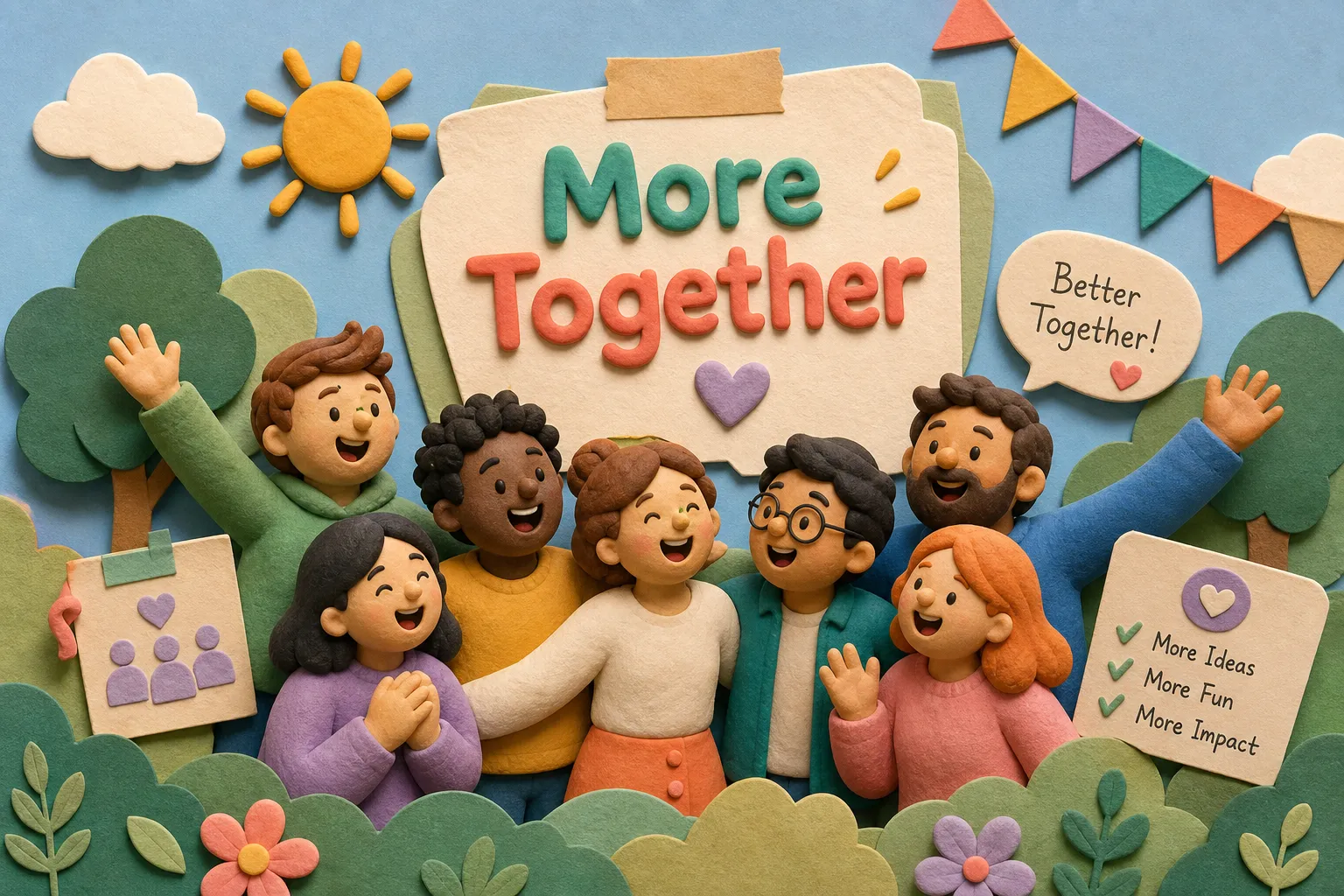
The phrase means that having more people in a group makes a situation better or more enjoyable. It’s a warm, enthusiastic way to say yes to adding more people. It goes beyond “okay, you can come”; it says “yes, we want you there.”
The grammar pattern is: “the more [people], the merrier [the situation].” This is a fixed comparative structure in English, what grammarians sometimes call a correlative comparative construction. Treat it as one complete unit. Don’t try to rearrange the words or replace them. Just learn the expression as it is and use it whole.
The cultural attitude behind it
In many American social contexts, gatherings are seen as better when more people join in. This phrase reflects that attitude: a signal of openness and friendliness, and a sense that a bigger group brings more energy to the room.
This may feel different if you come from a culture where a small, quiet dinner feels more personal and meaningful. Understanding that difference helps you recognize when Americans use this expression genuinely, and helps you use it at the right moment too.
The more the merrier: phrase history and film reference
“The more the merrier” has been used in English since at least the late 1300s. The earliest known written form appears in a Middle English poem called Pearl, recorded as “The mo the myryer.” By the 1540s, it was already listed as a common proverb. This is not slang or a recent trend. It’s a deeply established, standard everyday American English expression.
The phrase got a cultural boost in 1943 when Hollywood director George Stevens used it as the title of his wartime romantic comedy The More the Merrier, starring Jean Arthur and Joel McCrea. The film, set against the backdrop of Washington D.C.’s wartime housing shortage, follows strangers who end up sharing an apartment, a perfect premise for the proverb. The More the Merrier (1943) earned multiple Academy Award nominations and helped cement the expression in American popular culture. If you’re curious, the movie is available on several classic film streaming platforms and is worth a watch for both its charm and its very American sensibility.
How Americans use it in social settings
The most common place you’ll hear this expression is in social invitations. Think about a backyard barbecue, a birthday dinner, a movie night, or a casual game night. When someone asks, “Can I bring a friend?”, the host frequently replies with “the more the merrier.”
The phrase signals a warm, enthusiastic yes. It tells the other person that adding more people isn’t just acceptable, it’s genuinely welcome.
A short dialogue example
Here’s how it might look in a real text exchange:
Alex: “Hey, is it okay if I bring my coworker Sarah to the potluck? She just moved here and doesn’t know many people yet.”
Maria: “Of course! The more the merrier. Tell her to bring a dish if she wants, but she’s welcome either way.”
Maria’s reply feels warm and relaxed. The expression is short, but it communicates real enthusiasm, and that follow-up line (“she’s welcome either way”) reinforces it. That’s why Americans reach for this phrase so naturally.
How to say it and sound natural
When you say this phrase out loud, stress the words “MORE” and the first syllable of “MER-rier.” A natural American English pronunciation sounds like: the MORE the MER-ee-er /ðə mɔr ðə ˈmɛɹiɚ/ (based on standard American IPA). Keep the rhythm light and upbeat, not flat or slow. For a clear dictionary entry and usage notes, see the Cambridge Dictionary’s entry on the phrase.
Also worth noting: the phrase most commonly comes as a response to someone asking whether they can add a person to the group. That said, you’ll also hear it used proactively in invitations, for example, “Please join us; the more the merrier!” Both uses are natural. What you won’t often hear is someone opening a cold conversation with it out of nowhere; it needs a clear social context to land right.
Using the expression in team and workplace settings
This phrase is casual, but Americans do use it in friendly, informal workplace situations. If your team has a relaxed culture, you might hear it when someone is invited to join a brainstorming session, a team lunch, or a workshop. The tone of the conversation needs to already feel collaborative and low-pressure, this expression thrives in that kind of environment, not in formal or hierarchical settings.
A quick office example
David: “I mentioned the brainstorming session to Priya from the marketing team. She’s interested in joining, is that okay?”
Lisa: “Absolutely, the more the merrier. Fresh perspectives are always useful.”
This exchange works because both speakers know each other well and the setting is relaxed. Lisa’s second sentence also does something smart: it gives a reason, which makes the welcome feel even more genuine.
A simple rule for knowing when it fits at work
Here’s a useful heuristic: would you start this message with “Hey!”? If yes, the expression probably fits. Would you start with “Dear [Name],”? Then it doesn’t.
Keep this phrase for moments when the tone is already warm and informal. In formal emails, client communications, or structured meetings, use clearer professional language instead, something like “additional participants are welcome” or “we’d be happy to include more team members.” If you’d like a list of practical everyday expressions to practice in similar situations, see Common American Expressions Every English Learner Should Know, Your Daily American.
When this phrase doesn’t work
This expression only sounds genuine when the speaker truly wants more people there. If the situation is already full, private, or intentionally small, the phrase will feel out of place, or even sarcastic.
Think about a small dinner for six close friends, a private ceremony, a study group that needs quiet focus, or an event with a strict guest limit. In those cases, saying “the more the merrier” will confuse people. They’ll wonder if you really mean it, or they might think you’re not being serious.
Three common mistakes to avoid
Changing the fixed wording. This is a set phrase. Don’t say “the more the happier” or “more, the merrier.” While “the more the better” is also a real expression, it has a slightly broader feeling and works for things, not just people. For social invitations, “the more the merrier” is the phrase to use.
Using it without any context. This phrase works as a response. Wait for someone to ask if they can add a person, then reply with it, or use it in an invitation where the social context is clear. Starting a conversation with it out of nowhere sounds unnatural.
Using it in formal or written professional contexts. A client proposal, a formal email to a senior manager, or an official meeting agenda are not the right places for this expression. In those settings, choose clear, professional language instead.
Why learning a phrase in context changes everything
Knowing that “the more the merrier” means “more people, more fun” is a useful start. But knowing when to say it, how to say it, and what cultural expectation sits behind it, that’s what makes you sound natural.
Many learners see a phrase in a vocabulary list, memorize the meaning, and then hesitate when a real moment arrives. They aren’t sure if it’s the right situation or the right tone. So they don’t use it at all, and the expression stays stuck in their notes instead of in their conversations. For more examples of everyday expressions practiced in context, try 75 American English Phrases for ESL Beginners.
How Your Daily American builds real fluency
At Your Daily American, lessons are built around real situations, exactly the way this article works. You see an expression in a dialogue. You get the cultural context. You learn what sounds natural and what doesn’t. Then you try it yourself before moving on.
The platform covers everyday American phrases, workplace English, pronunciation, and much more, all organized so you can build your skills step by step, not just collect random vocabulary. If you want to keep learning American English this way, explore Your Daily American and find the right starting point for your level.
Try it yourself
“The more the merrier” is a warm, casual phrase Americans use to welcome extra people. It works best in social invitations and in friendly, informal workplace settings. It’s a fixed expression, so keep the wording exactly as it is, don’t swap or rearrange the words.
Practice now. Think of a real situation where a friend might ask to bring an extra person to something you’re planning. How would you respond using today’s phrase? Try writing one short text message with it right now. The more you use it in practice, the more naturally it will come out when you actually need it.
One expression at a time, your American English gets more natural. Real fluency builds from real phrases used in real moments, not from grammar drills alone. For more casual conversation starters that fit situations like this, check 25 Small Talk Phrases Americans Use Every Day, Your Daily American. Next time a friend asks to bring someone along, you’ll know exactly what to say.