You’re talking with an American coworker. They mention their weekend trip. You say, “That’s cool.” They share a new project idea. You say, “That’s cool.” They tell you something went wrong at work. You pause and say, “Oh. That’s cool.” By now, something feels off. You’re using the same phrase for very different situations, and it’s starting to sound flat.
Here’s the good news: “that’s cool” is one of the most flexible expressions in everyday American English, and that flexibility cuts both ways. Said with warmth, it signals genuine interest. Said flatly, it means little more than “okay.” Said slowly or sharply, it can carry real frustration. By the end of this article, you’ll know exactly what each version means, how to use related expressions like “cool with me” and “cool beans,” and which alternatives work better when you need more enthusiasm or a more professional tone. This is exactly the kind of real-world American English that Your Daily American is built around: what words actually mean in context, not just what the dictionary says.
The three meanings of “that’s cool” in American English
The same phrase can do three very different jobs depending on how you deliver it. Before you start looking for alternatives, it helps to understand what “that’s cool” already communicates on its own.
Sincere approval: when “that’s cool” shows genuine interest
Often, “that’s cool” is a real, positive reaction, it means “I like that,” “that’s interesting,” or “I’m impressed.” When someone says it with a warm, upbeat tone, the energy behind the words is friendly and genuine.
Example: “You built that shelf yourself? That’s cool, I didn’t know you were into woodworking.”
Notice how the follow-up comment makes the reaction feel invested rather than throwaway. The phrase lands differently when it’s paired with something specific.
Polite indifference: when it just means “okay”
Said more flatly, “that’s cool” shifts to a neutral acknowledgment, close to “okay” or “fine.” The words are identical, but the energy is lower. Some learners may misread a flat delivery as enthusiasm when it isn’t, which is why tone matters as much as the words themselves.
Example: “I’m going to grab lunch early.” / “That’s cool.”
In this context, the phrase is simply a low-stakes confirmation. No excitement, no objection, just acknowledgment. (If you want to study common ways people fill space in conversation, see Filler Phrases Every American English Learner Should Know.)
Sarcastic use: when it means the opposite
In a slow, flat, or sharp delivery, “that’s cool” can flip completely. It signals that the speaker is annoyed or unimpressed. In American English, sarcasm lives in the tone, not the words themselves. This is also where text messages get tricky: without voice or facial expression, the phrase in a text can feel dismissive even when it wasn’t meant that way.
Example: “The printer broke again.” / “That’s cool.” (said with a sigh)
If you’re ever unsure how a written “that’s cool” will land, adding an emoji or a follow-up line is a safe way to clarify your intent.
“Cool with me,” “cool beans,” and other phrases from the same family
Native speakers of American English use several other expressions built around the word “cool.” Each one carries a slightly different meaning and level of energy. For synonyms and related uses, see the Merriam-Webster thesaurus entry for “cool”.
“Cool with me”, easy agreement
“Cool with me” (or “that’s cool with me”) means “I agree” or “I don’t mind.” In casual speech, it often feels warmer and more personal than a plain “okay” because it signals flexibility and goodwill rather than bare compliance.
Example: “Can we meet at 3 instead?” / “Yeah, that’s cool with me.” (See the Cambridge entry for be cool with for usage notes.)
“Cool beans”, enthusiastic agreement with a retro feel
“Cool beans” is an older informal expression that signals happy agreement. It dates back to U.S. college slang from the late 1960s and is still understood today, though it tends to carry a dated or playful tone. Younger speakers often use it with a slight joking edge precisely because it sounds old-fashioned, which gives it a kind of ironic charm. (For a deeper look at the cultural history of “cool,” see How “cool” became such a big deal.)
Example: “I made extra pasta if you want some.” / “Cool beans, I’m starving!”
Other everyday “cool” phrases worth knowing
Three more phrases come up often in daily conversation:
- “We’re cool”, means there’s no problem or bad feeling between two people. (“I’m sorry about that.” / “Don’t worry, we’re cool.”)
- “Play it cool”, means to stay calm and not show too much emotion or excitement.
- “Cool it”, means to calm down or stop behaving in an intense way. (“Cool it, guys, it’s not a big deal.”)
Casual and slang alternatives Americans actually use
When “that’s cool” starts to feel too plain or too vague, these replacements give you more precise options for informal conversations.
Neutral everyday swaps (safe for all ages)
These expressions work in most casual settings without sounding strange or overly informal:
- “That’s neat”, works well for something small but interesting.
- “That’s nice”, warm and friendly, especially good for personal news.
- “Not bad”, sounds genuinely approving without going overboard.
- “I like that”, direct and confident, and it travels well across many different situations.
Enthusiastic options: when “cool” isn’t enough
“That’s awesome,” “that’s amazing,” and “that’s fantastic” are the go-to choices when you want to show real excitement. These are widely used and understood across all ages in American English, and they won’t sound out of place with a coworker, a friend, or a classmate.
Example: “I got promoted.” / “That’s awesome! Congratulations!”
Current slang: what younger Americans say in 2026
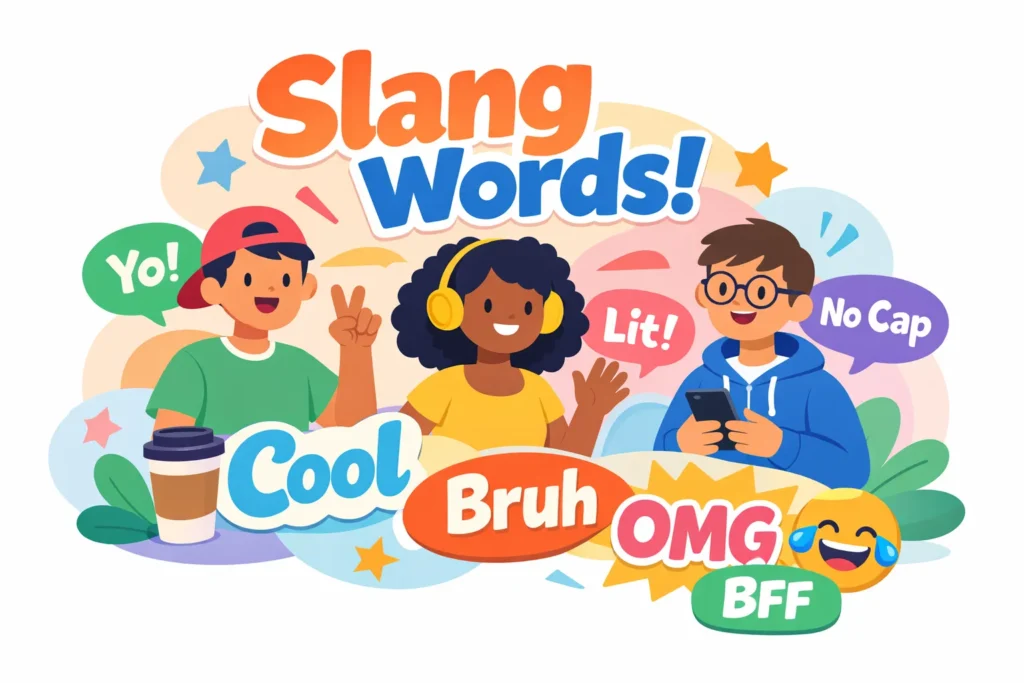
A few slang expressions are common right now, especially among people in their teens and twenties. Use them with friends, but avoid them in professional settings:
- “Bet”, agreement or confirmation, like saying “okay, got it.” (“Let’s leave at 7.” / “Bet.”)
- “No cap”, honestly or seriously, used to emphasize that you mean what you say. (“That concert was incredible, no cap.”)
- “Slay”, doing something impressively well. (“She slayed that presentation.”)
- “That’s fire”, something is excellent or very impressive. (“This song is fire.”)
These phrases sound natural in casual conversation with friends. In a meeting or a work email, they would feel out of place.
Professional alternatives for work and formal settings
“That’s cool” is too casual for the workplace. When you’re in a meeting or writing an email, you want to show that you’re listening and engaged without sounding informal.
Phrases for meetings and spoken conversations at work
These options sound professional without being stiff:
- “That makes sense”, one of the most useful responses in a meeting.
- “That’s a great point”, acknowledges a colleague’s idea respectfully.
- “That’s helpful to know”, shows you’re paying attention and that the information matters.
- “I appreciate you sharing that”, warm and polite, especially when someone delivers feedback or difficult news.
Example: A colleague explains a new process. Instead of “that’s cool,” you say: “That’s helpful to know. How does that affect the current timeline?” This response shows interest and moves the conversation forward.
Phrases for work emails and written communication
Written messages need slightly more care than spoken conversation. A few phrases that sound polished without being cold: “Thanks for the update,” “Noted, thank you,” “That’s very helpful,” and “Understood, I appreciate it.” These responses are clear, professional, and appropriate for emails to colleagues or managers. For tips on workplace communication styles that actually work, see the practical advice on effective workplace communication.
Real dialogues and follow-up prompts to practice right now
The best way to build these phrases into your conversation is to see them working together. A simple formula helps: Approve + Ask. Give a positive reaction, then follow it with a question. This keeps the conversation moving and shows real interest.
Casual conversations
Scenario 1, A friend’s new hobby:
“I’ve been learning to make pottery on weekends.”
“That’s awesome, how did you get into it?”
Scenario 2, Weekend plans:
“I’m going hiking on Saturday.”
“That sounds great. Where are you going?”
Scenario 3, A classmate’s part-time job:
“I started working at a bookstore.”
“Oh nice, I like that. Is it close to campus?”
Each response pairs approval with a follow-up question. That combination is what keeps conversations natural and signals to the other person that you’re genuinely engaged, not just filling space. If you want more structured practice building small talk in real situations, check out 25 Small Talk Phrases Americans Use Every Day, Your Daily American.
Work settings: professional reactions that build connection
Scenario, A colleague shares a project update:
“We switched to a new reporting tool this week.”
“That’s helpful to know. How does it affect the way we submit reports?”
Responding with “that’s cool” here would feel too casual. The professional version acknowledges the information, shows respect, and moves things forward with a clear question.
Quick practice: try it yourself
Here are two situations. Choose the right expression for each one, then write a follow-up question:
- Your friend tells you they started running every morning before work.
- Your manager tells you the team will start using a new project management system next month.
For the first situation, casual expressions like “that’s awesome” or “I like that” work well. For the second, “that’s helpful to know” or “that makes sense” fits better. The key is matching your expression to the person and the setting. If you want more practice like this, 75 American English Phrases for ESL Beginners has full lessons on conversational American English, professional communication, and everyday phrases, all built around real situations you’ll actually encounter.
What you can do with “that’s cool” now
“That’s cool” is not a single, fixed phrase. Its meaning shifts based on tone, context, and delivery. A warm, upbeat delivery signals real approval. A flat, even tone means neutral acknowledgment. A slow or sharp delivery signals sarcasm. That range, from genuine enthusiasm to dismissive eye-roll, is exactly why understanding tone matters as much as vocabulary when you’re building conversational fluency. For a quick look at the history and origin of the word, see the etymology on Etymonline.
You now have a full set of options to draw from: sincere approval phrases, neutral acknowledgments, the “cool”-based expression family, casual swaps for different energy levels, current slang with context warnings, and professional responses for work settings.
Put it into practice: choose two or three phrases from this article and use them in a real conversation this week. Pay attention to how native speakers respond, and notice their tone when they use these expressions back. That kind of active observation is one of the fastest ways to move from grammatically correct to genuinely fluent. When you’re ready to go deeper, Your Daily American is here with the lessons, context, and real-world practice you need, one expression, one conversation at a time.
Frequently asked questions about “that’s cool”
Is “that’s cool” ever rude?
On its own, no, but delivery makes a big difference. A flat or drawn-out “that’s cool” can come across as dismissive or sarcastic, especially in person or in a voice message. In written form, it can also feel lukewarm if the other person was expecting more enthusiasm. When in doubt, add a follow-up comment to make your tone clear.
When should I avoid using slang like “bet” or “that’s fire”?
Avoid current slang in professional settings, meetings, work emails, and conversations with managers or clients. These expressions are well understood among younger Americans in casual contexts, but they can undermine your credibility in formal situations. Stick to neutral or professional alternatives whenever the setting calls for it.
How can I tell which meaning someone intends when they say “that’s cool”?
Listen for the energy behind the words. A warm, engaged delivery usually means genuine approval. A short, even response with no follow-up typically signals polite acknowledgment. A slow, heavy delivery, especially with a pause before it, often signals sarcasm or frustration. In text, look for context clues like punctuation, emojis, or follow-up messages. For more on how tone and word choice shape communication, you may find further reading helpful in authoritative language resources.