A cashier in Baltimore calls you “hon.” A coworker in Atlanta says “sugar.” Your American friend texts you “babe.” Are these romantic? Friendly? Just normal? In American English, affectionate nicknames are everywhere, and they don’t always mean what you think. Understanding them goes beyond knowing definitions. You need the cultural context, the relationship rules, and the regional patterns behind each word.
This article will help you recognize the patterns behind common American pet names so you can decide which ones are appropriate for a given person, setting, and moment. You won’t sound too formal, too familiar, or accidentally rude. That’s the kind of practical, real-world language knowledge that makes a real difference in your daily life in the U.S.
The most common affectionate nicknames in American English
Sweet-based nicknames: honey, sweetie, and sugar
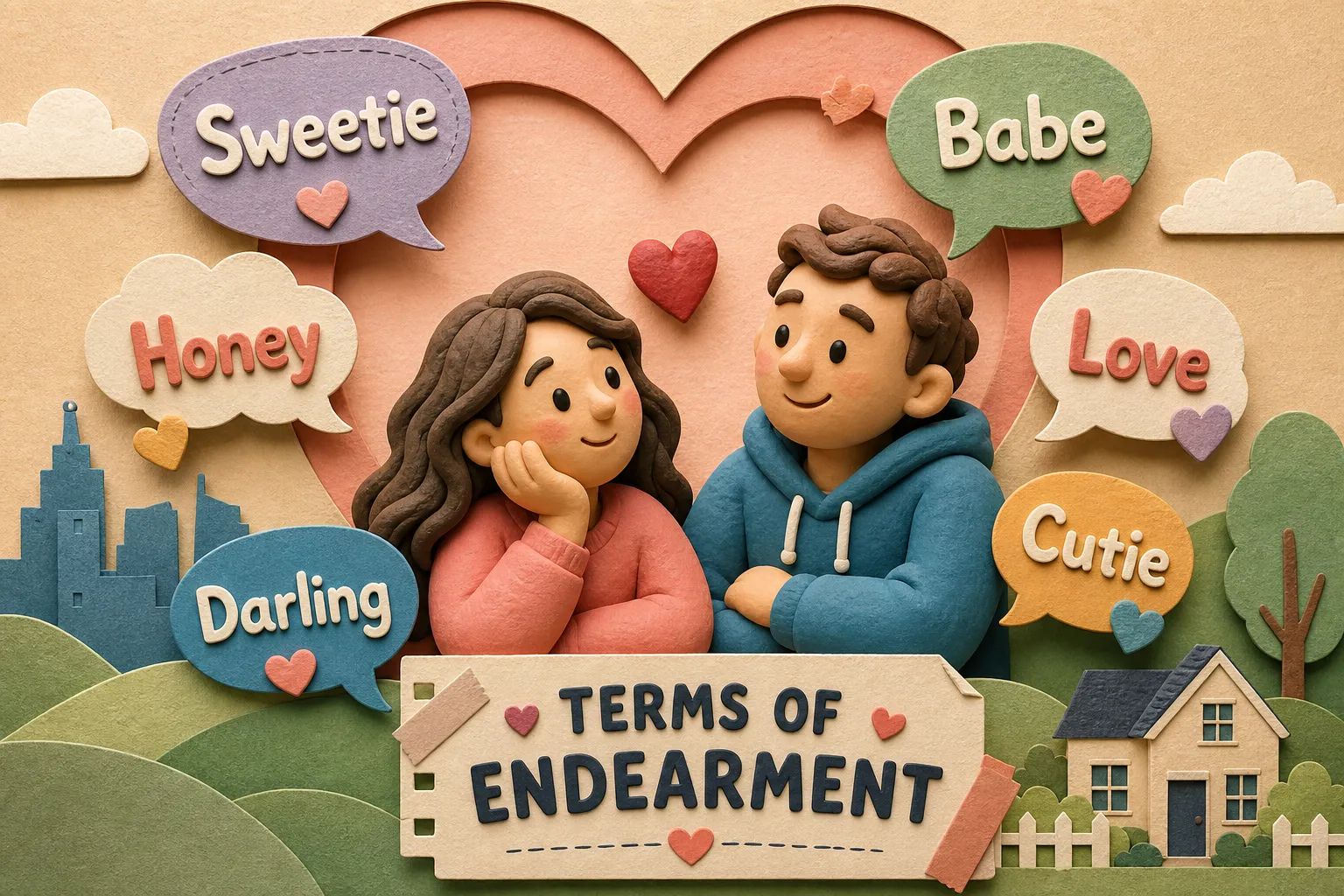
“Honey,” “sweetie,” and “sugar” all come from the same idea: sweetness as a way to describe someone you care about. Of the three, “honey” is the most widely used. It feels warm and natural across many relationships and settings. Examples: “Thanks for your help, honey.” / “You okay, sweetie?” / “Can I get you anything, sugar?”
“Sweetie” sounds a little softer than “honey” and is especially common with children or in close, informal friendships. “Sugar” is less universal. You’ll hear it mostly in the Southern United States, not across the whole country.
More intimate pet names: babe, baby, and darling
“Babe” and “baby” carry a stronger romantic weight in American English than in British English. They’re very common between romantic partners, but they sound strange when used with strangers or coworkers. Example: “Hey babe, did you pick up the groceries?” That sentence sounds completely natural between partners. Between coworkers, it would feel very out of place.
“Darling” exists in American English, but many Americans consider it somewhat old-fashioned in casual speech. You’ll hear it more in British English or in older American speech. Among younger speakers in the U.S., it tends to show up in theatrical or deliberately dramatic contexts rather than everyday conversation. For comparison with British usage, see typical British terms of endearment. For additional examples of older or old-fashioned choices, this roundup of old-fashioned terms of endearment is useful.
Friendly terms: buddy, pal, and dear
“Buddy” is one of the most purely friendly terms in American English. It’s warm but completely non-romantic. Adults use it with children, male friends use it with each other, and even strangers use it in a cheerful, casual way. Example: “Hey buddy, you dropped something!”
“Pal” is similar but slightly old-fashioned. “Dear” can feel warm and kind when an older person uses it, but it can also sound patronizing when a stranger uses it with someone younger. Context makes all the difference with these words.
Which terms of endearment fit which relationships
Romantic partners and the pet names they use
“Babe,” “baby,” “honey,” “sweetheart,” and “my love” are the most common terms between romantic partners in the U.S. Most couples also develop their own private nicknames over time. These terms signal closeness and exclusivity, so using them outside a romantic relationship can send the wrong message. For example, “Goodnight, sweetheart. I’ll see you tomorrow” sounds natural between partners, but between coworkers or casual friends, that same exchange would feel uncomfortable and out of place.
Family: parents, children, and warm everyday moments
Terms like “sweetie,” “honey,” “baby,” “angel,” and “dear” are very common between parents and young children. As kids get older, these terms often change or disappear, though many families continue using them. Between adult siblings or with aging parents, “honey” and “sweetheart” can still appear as simple signs of warmth.
“Buddy” is extremely common from a parent or adult to a young boy. Example: “Come on, buddy, time for dinner.” It’s friendly, encouraging, and completely age-appropriate.
Friends and casual acquaintances: when “honey” is just friendly
In some American social circles and among close friends, terms like “honey,” “sweetie,” “love,” and “dear” flow freely. This can catch ESL learners off guard. The key signal is tone and body language. When a waitress calls you “hon,” she’s being friendly, not flirtatious.
Imagine you walk into a diner in the South. The server brings your coffee and says, “Here you go, hon. You need anything else?” She says this to every customer. It’s warmth, not a personal invitation. Learning to read that difference is a real fluency skill. That skill also matters when you step into settings where the same words carry different weight entirely.
When a term of endearment is welcome vs. when it’s not
Why tone and relationship stage change everything
The same word can land completely differently depending on how it’s said and how well two people know each other. “Sweetie” in a soft voice between close friends feels kind. The same word said sharply by a stranger can feel disrespectful. In practice, these terms land well when they match the emotional closeness already present in a relationship and the mood of the moment.
Contrast: “You okay, sweetie?” said by a caring friend after a hard day. Now imagine a stranger in a meeting saying the same thing to a professional colleague. The word is the same. The effect is completely different.
The workplace rule most learners miss
In American professional settings, using affectionate nicknames with coworkers, clients, or managers is usually not appropriate, especially if you don’t know the person well. Words like “honey,” “sweetie,” “dear,” and “darling” can sound patronizing or unprofessional at work. HR guidance in the U.S. recommends using first names instead.
This is especially important for ESL learners who come from cultures where affectionate address is more common in professional settings. What feels polite and warm in your home culture may feel intrusive or disrespectful to an American colleague. When in doubt, use the person’s first name. It’s always safe. For more on legal and HR perspectives about this behavior, see this discussion on terms of endearment and workplace harassment.
Starting a new relationship: when to wait
Using a term of endearment too early in a new friendship or romantic relationship can feel presumptuous. These terms work best when both people already feel a sense of closeness and trust. If you’re not sure, start with the person’s name and let the other person introduce informal language first.
This is a smart, practical strategy for new relationships of any kind, romantic or friendly. Letting the other person lead on informal address shows social awareness, and that’s something native speakers notice and respect.
Regional differences: how pet names change across the U.S.
The American South’s warm naming culture
The South is known for its particularly affectionate public language. Terms like “sugar,” “darlin’,” “hon,” “sweetheart,” and “baby doll” are used more freely between strangers in Southern states than in most other parts of the country. A server in Georgia might call every customer “sugar” and mean nothing beyond friendly hospitality.
Baltimore, Maryland, has its own version of this. The word “hon” is deeply connected to Baltimore’s working-class identity, especially in neighborhoods like Hampden. The city even holds an annual HonFest. When a Baltimorean calls you “hon,” it’s a sign of local warmth and belonging, not personal familiarity. Whether you’re in the South or in Baltimore, treat this kind of address as cultural warmth, not a personal signal. For more on Baltimore’s unique usage, see this piece on the Baltimore “hon” tradition.
How northern and western states use these terms differently
In many northern and western U.S. cities, strangers are less likely to use affectionate nicknames with people they don’t know well. The warmth exists, but it tends to stay within established relationships. Using “honey” or “sweetie” with a stranger in New York City or Seattle can feel out of place or even intrusive.
A practical tip: pay attention to the people around you. If you move to a new city or region, listen to how people address each other in coffee shops, stores, and casual conversations, then mirror what you hear. This approach reflects how language learners naturally adapt to local norms, and it’s one of the fastest ways to sound natural in a new environment. For more common examples you can hear every day, check this list of Most Common American Slang Words Used in Daily Life.
Why knowing the words isn’t enough: the cultural layer
The difference between knowing a word and using it right
Many intermediate ESL learners can define “babe” or “sweetie” perfectly on a vocabulary quiz. But then they use the word in the wrong relationship, at the wrong moment, with the wrong person. The result isn’t a grammar mistake. It’s a cultural one, and those mistakes are often harder to notice and correct.
These errors don’t sound “wrong” in a grammar sense. They just feel off to native speakers. That feeling of something being slightly off is hard to explain but easy to sense, and it gets in the way of real connection. Real fluency means understanding the when and the who, not just the what.
How Your Daily American helps you go beyond word lists
This kind of layered understanding, who uses a word, in which situations, what feeling it carries, and what to avoid, is what separates knowing a term of endearment from actually using it well. At Your Daily American, the everyday expressions content is built around exactly that approach. Each expression comes with real-life context rather than a bare definition, which means you’re learning the full picture, not just the word.
If you want to start using words like “honey,” “babe,” and “buddy” with real confidence, explore the Everyday American English section on Your Daily American. You’ll find lessons that cover the cultural rules that textbooks usually leave out.
Start using these terms with confidence
American terms of endearment carry layers of meaning. They depend on the relationship, the tone, the setting, and the region. “Honey” is not the same as “babe.” “Buddy” is not the same as “dear.” A word that feels warm in one context can feel awkward or even off-putting in another.
The goal isn’t to memorize a list. It’s to understand the patterns behind the language. Once you do, you’ll start noticing these terms everywhere: on TV shows, at the coffee shop, in conversations at work. You’ll know what they mean and when to use them yourself. You can also practice the related conversational starters with short dialogues like the 25 Small Talk Phrases Americans Use Every Day.
Try this now: Think of one person in your life, a close friend, a partner, or a family member. Look back at the terms in this article and choose one that would feel natural and appropriate with that person. Practice saying it out loud. Notice how it feels. That small step is real English learning in action.