Picture this: you finish writing a paragraph in English and re-read it. “The food was good. The service was good. Overall it was a good experience.” You know something feels off, but you’re not sure how to fix it. The word “good” is not wrong, it’s just doing almost no work. It’s so broad, so neutral, that it tells the reader almost nothing about how you actually feel.
Overusing “good” often signals that a learner hasn’t yet calibrated the nuance among positive adjectives. Native speakers reach for many alternatives without thinking, picking the word that matches exactly how strong, how formal, or how specific their approval is. At Your Daily American, we call these “precision words,” the kind that make your English sound layered and real, not just textbook-correct. This article is your practical good synonym guide for American English, covering everything from casual slang to formal professional language, with real example sentences throughout.
By the end, you’ll know which alternative fits which situation, understand the difference in intensity between words like “decent,” “great,” and “outstanding,” and feel ready to swap out “good” with confidence in both conversation and writing.
Casual good synonym choices for everyday American conversation
In spoken American English, “good” often gets replaced by words with more energy, words that signal enthusiasm, cultural fluency, and real emotional investment. Choosing the right informal word doesn’t just expand your vocabulary; it shows you understand how Americans actually talk.
Great, solid, and awesome: the everyday workhorses
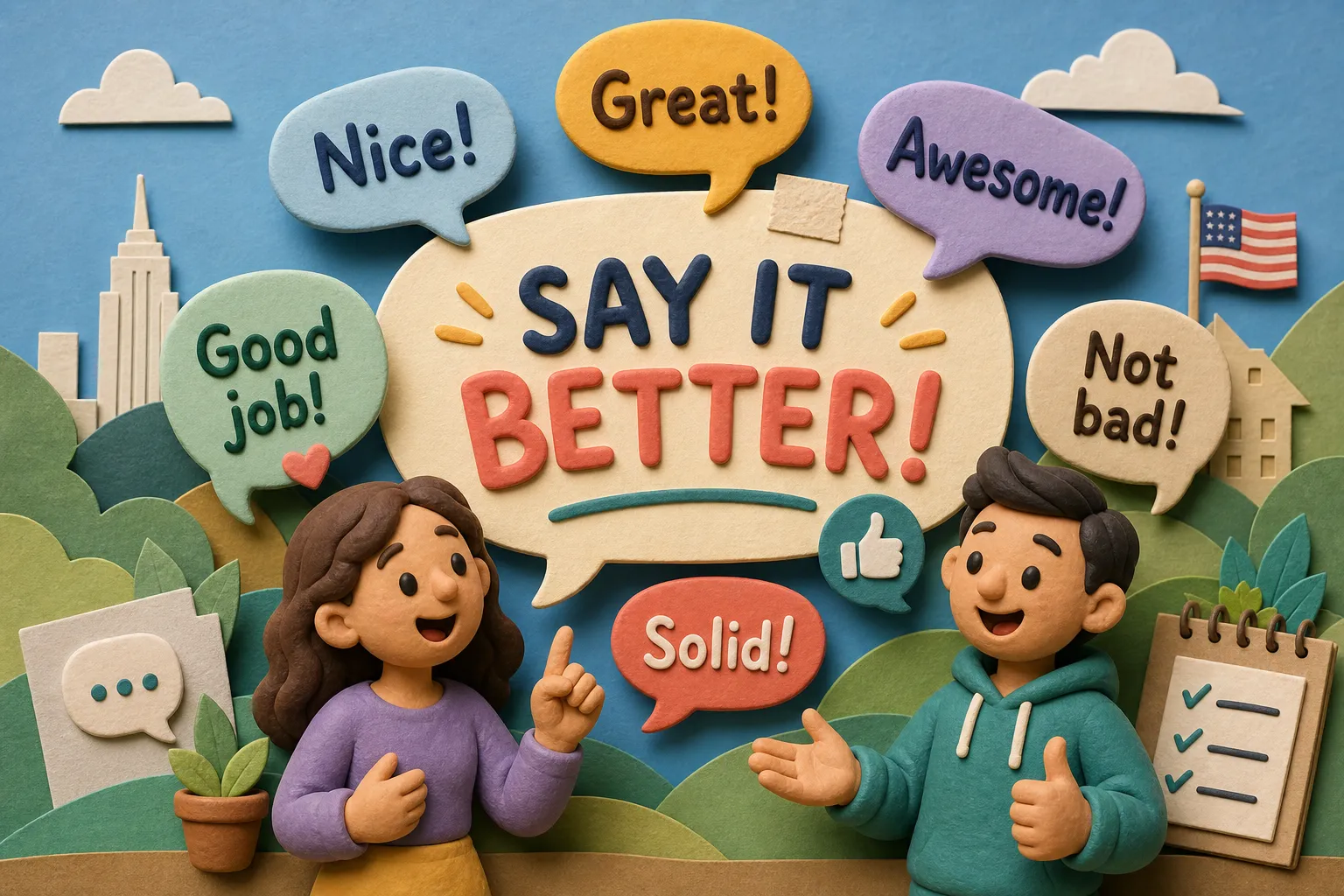
Common casual replacements for “good” include “great,” “solid,” and “awesome,” and each one carries a slightly different flavor. “Great” is warm and enthusiastic: “That was a great idea, I think it’ll work.” “Solid” is calmer and more affirming, focused on reliability rather than excitement: “She gave a solid presentation” or “That’s a solid plan.” “Awesome” turns up the energy all the way: “The concert was awesome, I’d go again in a second.”
“Solid” deserves special attention because it works well in professional-casual settings too, such as after a meeting or in a peer review. Saying “Good job on that report” sounds polite but vague. Saying “That was a solid draft” communicates that the work was dependable and well done, without sounding over the top.
Slang synonyms native speakers use right now
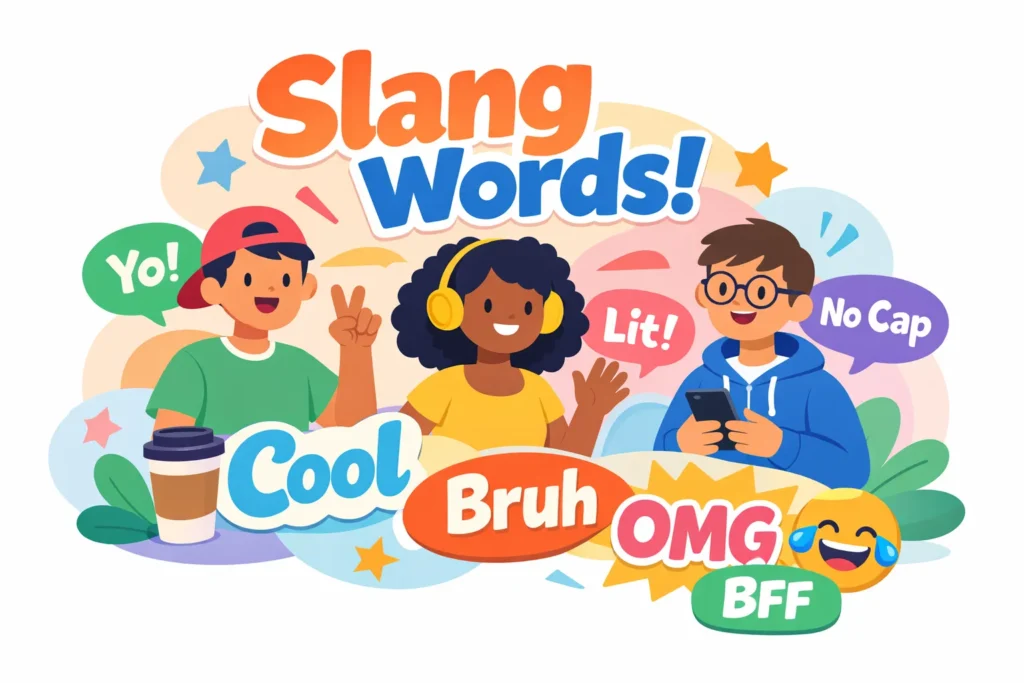
Current American slang offers a handful of expressive alternatives you’ll hear constantly in everyday conversation, texting, and on social media. “Fire” means something is excellent or impressive: “This pizza is fire.” “Legit” signals genuine approval: “That movie was legit one of the best I’ve seen.” “On point” means something is perfectly executed: “Her outfit was on point.” “Sick” (used positively) means seriously impressive: “That skateboard trick was sick.” “Clutch” describes something that came through at exactly the right moment: “That call was clutch, saved the whole project.”
These words fit texting, casual hangouts, and social media. In a work email or a formal speech, though, they’d land awkwardly. Knowing when to use them is just as important as knowing what they mean. For a focused look at how common adjectives like “good” and “nice” operate in everyday usage, see this Everyday Grammar article that explains many practical uses.
Formal good synonym options for workplace and written English
In professional settings, “good” can actually undercut your message. If a colleague delivers an exceptional presentation and your feedback is “good job,” it reads as lukewarm. Stronger, more specific vocabulary signals that you’re paying attention and that your praise carries real weight.
Excellent, outstanding, and exceptional: knowing the difference
These three words are often treated as interchangeable, but they each say something slightly different. “Excellent” describes high quality directly and factually: “Her research was excellent.” “Outstanding” implies something that rises above the rest: “His performance was outstanding this quarter.” “Exceptional” suggests rarity, something unusually or surprisingly good: “She has exceptional attention to detail.”
In a performance review, the difference matters. Calling work “excellent” is clear, strong praise. Calling it “outstanding” suggests it stood apart from peers. Calling someone “exceptional” is the strongest of the three, implying they’re a rare talent. Use these words with that scale in mind. For more related alternatives, check the Cambridge thesaurus entry for high-quality.
Commendable, exemplary, and beneficial: when to reach for them
“Commendable” is formal praise that recognizes effort or behavior worth acknowledging: “Your dedication to the project was commendable.” Notice it praises the effort, not the raw quality of the output. “Exemplary” is the most elevated of the three, used when something is so good it sets a standard: “Her communication skills are exemplary, a model for the team.” “Beneficial” works differently from the others; it’s not about quality at all, but about value or usefulness: “This policy change will be beneficial for new employees.”
Getting these right makes a real difference in professional writing. Saying “Your effort was exemplary” fits perfectly. Saying “Your effort was beneficial” sounds odd, because “beneficial” describes outcomes, not behavior.
The intensity ladder: from “fine” to “exceptional”
One of the most practical ways to think about these alternatives is as a scale of approval strength. Choosing the wrong point on that scale sends the wrong message, even if the word is technically positive.
The mild end: fine, decent, and satisfactory
“Fine,” “decent,” and “satisfactory” all signal acceptance rather than enthusiasm. “Fine” in particular reads as lukewarm in American conversation. Compare: “The report is fine.” “The report is excellent.” “The report is outstanding.” The first one might make your colleague wonder if you actually liked it. A common ESL mistake here is using “fine” as genuine praise when it actually comes across as “I have no real complaints, but I’m not excited either.”
“Decent” sits slightly higher: “The hotel was decent” means it was solid enough, not a complaint, but not a rave. “Satisfactory” is more formal and even more neutral: “Performance was satisfactory” is the kind of phrase that appears in official evaluations when someone met expectations but didn’t exceed them.
Moving up: solid, strong, great, and excellent
“Solid” and “strong” occupy the mid-range. They express calm, confident approval: “She made a strong argument” or “That was a solid effort.” Moving further up, “great” adds warmth and enthusiasm: “You did a great job.” At the top of everyday vocabulary, “excellent” delivers clear, direct, formal praise: “The proposal was excellent.”
The key insight here is that the difference is tonal and contextual, not just semantic. “Solid” sounds like measured confidence. “Great” sounds like genuine warmth. “Excellent” sounds like an official stamp of quality. Readers and listeners pick up on those signals even when they can’t explain why.
Context matters: synonyms for food, people, and ideas
The word “good” shifts meaning depending on what you’re describing. “Good food,” “a good person,” and “a good idea” are three completely different compliments. The alternatives work the same way, some fit experiences, some fit people, some fit concepts.
Describing food, places, and everyday experiences
For food, reach for “delicious” or “fantastic”: “The pasta was delicious” or “That was a fantastic meal.” For places and experiences, “lovely” and “pleasant” work well: “It was a lovely afternoon” or “The walk was really pleasant.” For activities, “enjoyable” is natural and versatile: “The class was enjoyable.” Notice that “nice” is softer and warmer than “good” in these contexts: “That was a nice evening” feels more personal and genuine than “That was a good evening.”
Describing people, work, and ideas
When describing a person’s ability, use specific words: “talented” or “capable” for skill, “impressive” or “remarkable” for achievements. “She’s a talented designer” tells you something real. “She’s a good designer” tells you almost nothing. For ideas, “thoughtful” signals depth and care: “That was a thoughtful suggestion.” “Insightful” works similarly: “Your feedback was insightful.”
This precision matters in professional and social settings because it shows you’re actually evaluating, not just approving. “He’s a capable project manager” carries more credibility than “He’s a good project manager.”
Collocations and common mistakes to avoid
Finding the right synonym for good is only half the challenge. In English, certain adjectives pair with specific prepositions and nouns, and using the wrong combination sounds off to native speakers even when the meaning is close.
Adjective-preposition collocations to memorize
Several patterns come up constantly. “Excellent at” goes with skills and activities: “She’s excellent at public speaking.” “Beneficial to” or “beneficial for” goes with people, groups, or outcomes, both forms appear in standard usage, with “beneficial to” often preferred: “Regular reading is beneficial to your vocabulary” or “Regular reading is beneficial for your vocabulary.” “Suitable for” describes fit and appropriateness: “This activity is suitable for intermediate learners.” Swapping these prepositions, saying “excellent for public speaking” or “beneficial at your vocabulary” (both wrong), sounds unnatural immediately, even though the intended meaning is similar. For targeted practice and lists of common pairs, see this collection of common adjective-preposition combinations.
ESL mistakes that reveal a vocabulary gap
A few calibration errors come up repeatedly among intermediate learners. The first is using “fine” as strong praise when it actually sounds neutral or dismissive: if a friend asks how your date went and you say “It was fine,” they’ll assume it wasn’t great. The second mistake is using “commendable” for quality: “The writing quality was commendable” sounds odd because “commendable” praises effort and behavior, not raw output quality. The third is overusing “exceptional” until it loses impact, once a word gets attached to everything, it stops meaning anything in particular.
These aren’t complex grammar errors. They’re calibration mistakes, easy to fix once you understand the underlying meaning of each word.
How Your Daily American helps you build vocabulary that actually sticks
Memorizing a list of alternatives to good is a starting point, not the finish line. Real vocabulary fluency means reaching for the right word automatically, in real time, without stopping to mentally sort through a list. That kind of command comes from seeing words in context repeatedly, not from memorizing definitions. Learn with Your Daily American, where lessons are structured to move words from recognition to use.
Why context is the key to owning a new word
There’s a real difference between passive recognition, understanding a word when you read it, and active command, where you reach for it naturally in speech or writing. Think of a word in isolation as a tool without instructions: you know it exists, but you’re not sure when to use it. Seeing a word used across multiple real situations is what turns passive recognition into active command. Research in second-language acquisition consistently points to this kind of repeated, contextual exposure as the engine of vocabulary growth.
Keep going from here
Your Daily American is built around exactly this kind of layered, context-rich learning. Every lesson, whether it covers everyday American expressions, professional communication, or the cultural nuance behind word choice, is designed to show you language the way native speakers actually use it. You don’t just learn what words mean; you learn when, why, and how to use them. Explore the vocabulary and conversational English content on the platform to keep building the precision your English needs.
Keep building from here
“Good” is a starting point, not a destination. The right good synonym depends on three things working together: intensity (from “fine” all the way up to “exceptional”), register (knowing when “awesome” fits and when “outstanding” is the right call), and collocation (pairing adjectives with the prepositions that native speakers actually use). Nail those three, and your vocabulary stops sounding like a textbook and starts sounding like you.
Here’s a quick practice prompt: think of three situations from today, a meal, a conversation, something you watched or read, and write one sentence for each, replacing “good” with a more precise word from this article. The goal isn’t perfection; it’s the habit of reaching for something more specific. Every time you make that choice consciously, you’re building the instinct that makes better word for good choices feel automatic.
Frequently asked questions about good synonyms
What is a good synonym for “good” in formal writing?
In formal writing, strong alternatives to good include “excellent,” “outstanding,” “commendable,” and “exemplary.” Each one signals a slightly different kind of praise, “excellent” is direct quality, “outstanding” implies standing above others, and “exemplary” means something sets a standard worth following.
What’s a better word than “good” for casual conversation?
“Great,” “solid,” and “awesome” are all reliable casual upgrades. “Solid” works especially well in professional-casual contexts; “awesome” and current slang like “fire” or “on point” suit informal social settings.
Are there words like “good” that work for both people and things?
Yes, “impressive,” “remarkable,” and “excellent” all work across contexts. The key is matching the word to what you’re describing: “impressive” fits achievements, “remarkable” highlights something unusually noteworthy, and “excellent” is versatile enough for both quality work and strong performance.
Why does using the right synonym for good matter for ESL learners?
Choosing a more precise positive adjective signals fluency and shows you understand nuance, not just vocabulary range. When a learner uses only “good” for every situation, it flattens meaning and can come across as vague or uncommitted. Learning to match the right word to the right context is one of the clearest markers of moving from intermediate to advanced English.