Picture this: you run into an American friend you haven’t seen in months. They smile, open their arms, and say, “Oh my gosh, it’s been a minute!” You freeze. A minute? You just saw them last week… wait, no. What do they mean?
If that moment feels familiar, you’re not alone. “It’s been a minute” is one of those American expressions that sounds simple but means something completely different from its literal words. It has nothing to do with 60 seconds. It means a long time has passed. By the end of this lesson, you’ll know exactly what the phrase means, where it comes from, when to use it, and how to sound natural when you do. At Your Daily American, we teach real, living phrases like this one, the kind Americans actually say every day, not the formal sentences you find in a grammar book.
What “It’s Been a Minute” Really Means
The Literal Reading vs. the Real Meaning
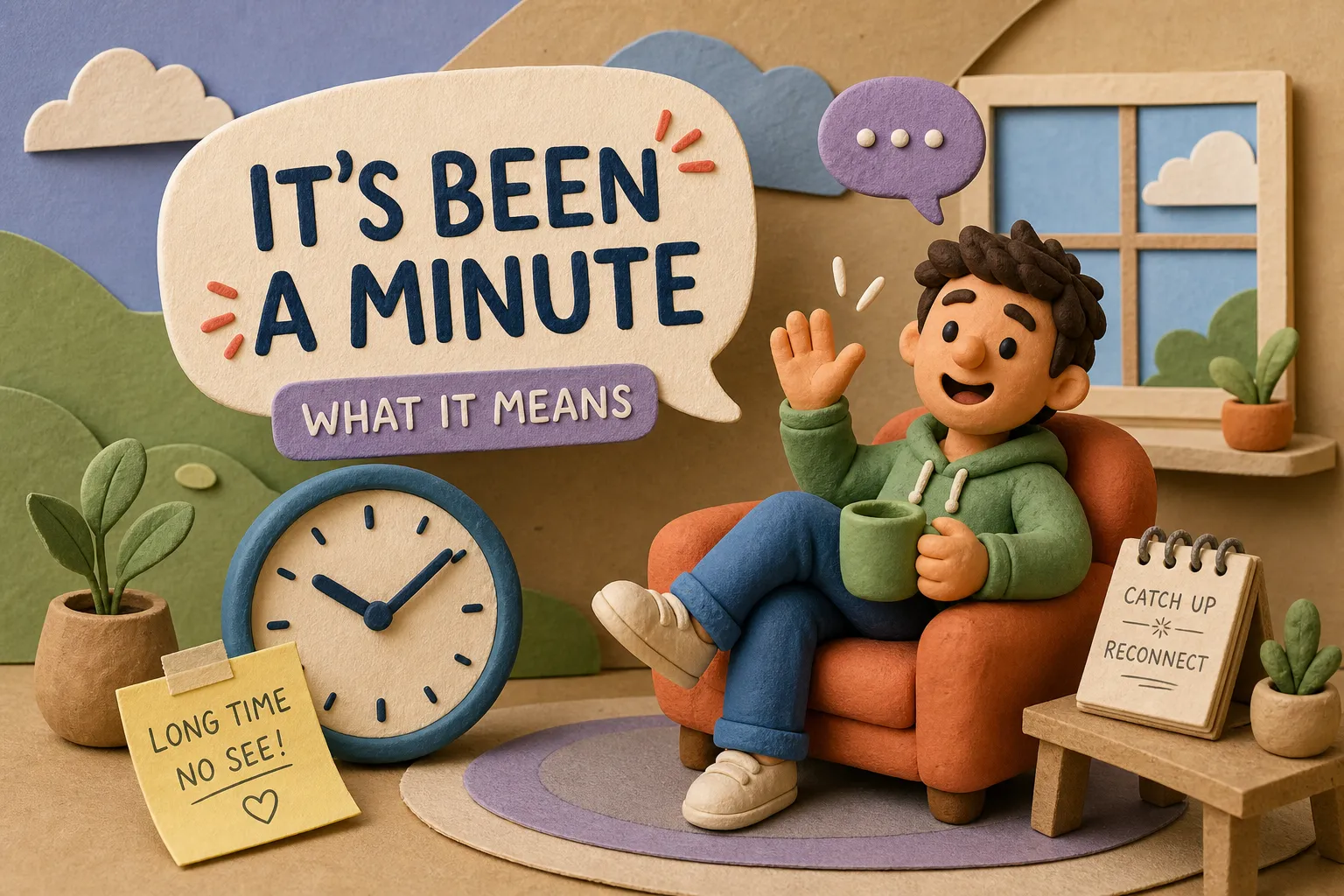
The word “minute” normally means 60 seconds. But in this expression, it means something very different: a long, unspecified period of time. When an American says “it’s been a minute,” they mean: “We haven’t spoken, seen each other, or done this in a long time.” The gap could be weeks, months, or even years. The speaker isn’t measuring time precisely.
Here are two clear examples:
- “Hey! It’s been a minute. How have you been?”
- “I haven’t eaten at that restaurant in a minute. We should go back.”
In both sentences, “a minute” signals a long gap, not 60 seconds.
How “It’s Been a Minute” Compares to Similar Expressions
“It’s been a minute” belongs to a family of expressions Americans use to talk about time gaps. “It’s been a while” means the same thing and works in most situations. “Long time no see” is a friendly greeting used when you meet someone again after an extended absence. All three are common ways to reconnect.
The key difference is tone. “It’s been a while” is neutral and fits many settings. “Long time no see” is friendly but can feel a little old-fashioned to younger speakers. “It’s been a minute” feels younger, more energetic, and warmer. It often sounds more playful or warmly conversational than the more neutral alternatives, the speaker isn’t just noting the time gap, they’re genuinely glad to be back in touch.
Where This Phrase Came From
Its Roots in African American Vernacular English
This expression comes from African American Vernacular English, or AAVE. AAVE is a variety of American English spoken mainly in Black American communities. It has its own vocabulary, grammar, and expressions, and it is a fully developed, rule-based variety of English, not slang or “bad English.” Many of the most expressive and widely used phrases in everyday American English have roots in AAVE.
The earliest recorded use of “it’s been a minute” with this meaning goes back to the 1970s. Linguists believe it may have developed from the older phrase “in a minute,” which meant “soon” or “in a little while.” Over time, the meaning shifted to describe a long, indefinite period, essentially the opposite of “soon.”
How It Spread into Everyday American Speech
By the early 2000s, the phrase had moved from AAVE into broader American English. Music, television, and social media all helped it spread. When entertainers used it in interviews and lyrics, audiences outside the original speech community heard it and started using it too, which is a very common path for AAVE expressions entering mainstream American speech.
One clear sign of how mainstream the phrase became: NPR launched a culture podcast titled It’s Been a Minute in 2017. The show, hosted by Brittany Luse since October 2022, covers pop culture and current events in a warm, conversational style. The title alone signals that the phrase had become widely familiar to American audiences by that point. If you want to hear the expression used naturally in context, listening to It’s Been a Minute episodes is a great way to train your ear, the show’s conversational tone mirrors exactly the register where this phrase lives. Today the expression is widely used, especially among younger Americans.
When Americans Actually Use “It’s Been a Minute”
Reconnecting with Someone After a Long Time
This is the most common situation. You run into an old friend, a former coworker, or a classmate you haven’t spoken to in months. The phrase works perfectly as a warm, friendly opener. The tone is happy and genuine, the speaker is glad to see you again.
Here are two short dialogues showing this in action:
Running into an old coworker:
Alex: “Hey! It’s been a minute! How are things at your new job?”
Maya: “So good! I can’t believe it’s been almost a year. We need to catch up.”
Texting a friend you lost touch with:
Jordan: “Hey, it’s been a minute! I was thinking about you.”
Sam: “Oh wow, it really has! So much has happened. Call me tonight?”
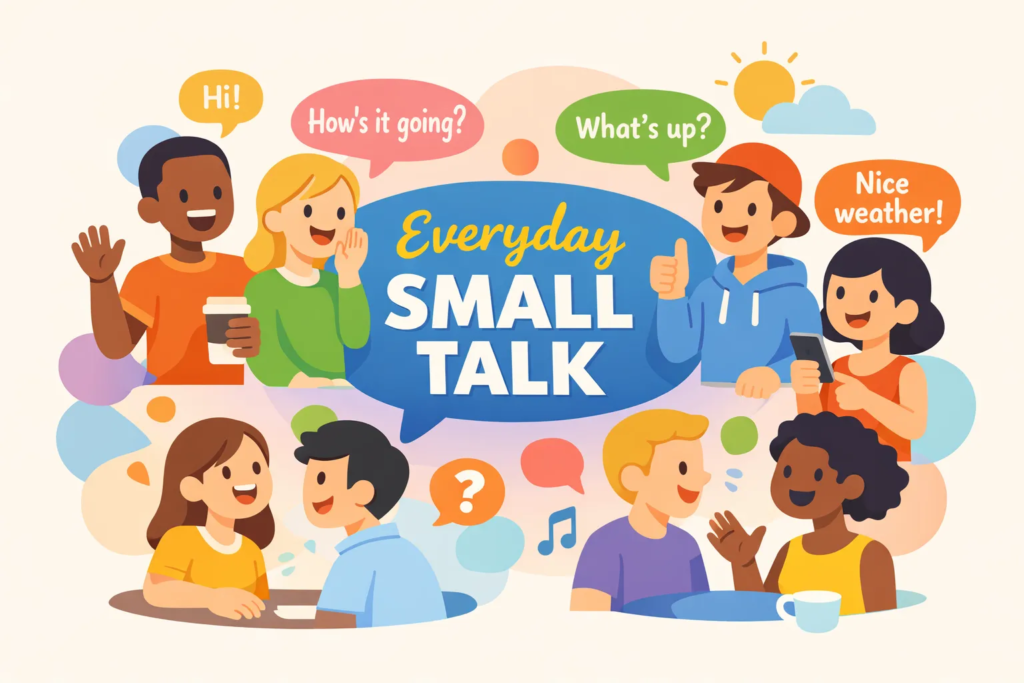
Notice that both conversations feel warm and relaxed. The phrase sets a positive, friendly tone right away. For more ways to open conversations, see our 25 Small Talk Phrases Americans Use Every Day, Your Daily American.
Talking About Something You Haven’t Done in a While
“It’s been a minute” also works when you talk about activities, places, or experiences, not just people. You can use it to describe anything you haven’t done or visited in a long time, which makes the phrase very flexible.
Some natural examples:
- “We haven’t played basketball in a minute. Let’s set up a game.”
- “I haven’t cooked pasta in a minute. I should try again.”
- “It’s been a minute since I watched a movie at the theater.”
In each case, the speaker isn’t saying the gap was exactly 60 seconds. They mean it has been a noticeably long time since that activity happened.
How to Use “It’s Been a Minute” Naturally in Conversation
Matching Tone and Register
“It’s been a minute” is casual. Use it with friends, classmates, or coworkers you already have a friendly relationship with. It works well in text messages, casual phone calls, and relaxed social situations. It does not belong in formal writing, a job interview, or a first conversation with a client or supervisor.
A simple rule: if you would use “Good afternoon” or “Dear Mr. Smith” in the same situation, skip “it’s been a minute.” In formal or professional contexts, “it’s been a while” or “it has been some time” carry the same meaning with a more neutral, professional tone.
Putting It into a Full Sentence
The phrase works two ways. You can use it as a short, standalone opener, or you can build it into a full sentence with “since” to add more detail. Both are natural and common.
Standalone:
- “It’s been a minute! Good to see you.”
- “Hey, it’s been a minute! What have you been up to?”
With “since” in a full sentence:
- “It’s been a minute since we last talked.”
- “It’s been a minute since I’ve been to this part of town.”
Here is a short dialogue showing the phrase inside a real conversation:
Chris: “Oh wow, it’s been a minute since I’ve seen you around here.”
Dana: “I know! I moved to a new neighborhood. This is my first time back.”
Chris: “We should get coffee and catch up.”
Dana: “Yes, for sure. Let’s plan something.”
The phrase starts the conversation naturally and opens the door for more talking.
Mistakes ESL Learners Often Make
Taking the Phrase Too Literally
The most common mistake is simple: hearing “minute” and thinking the speaker means exactly 60 seconds. This can cause a confused pause or a wrong response, like checking your watch or saying “No, it’s only been one minute.” That kind of confusion happens to almost every ESL learner the first time they hear this expression, so don’t feel bad if it happened to you.
The fix is straightforward once you know the meaning. In most informal contexts, you can mentally swap “it’s been a minute” for “it’s been a long time” and you’ll be right. Just keep in mind that in rare cases where the context is explicitly about timing, “minute” can still be literal, so let the situation guide you.
Using It in the Wrong Situations
Two common errors come up with this phrase. The first is using it in formal or professional contexts where it sounds too casual. For example, starting a business email with “It’s been a minute!” would feel unprofessional to most American readers. The second mistake is saying it to someone you’re meeting for the very first time. The phrase implies a prior connection, so using it with a stranger doesn’t make sense and can feel awkward.
A quick way to check: “it’s been a minute” only works if you and the other person already know each other and haven’t been in contact for a while. If either of those conditions is missing, choose a different phrase.
Keep Learning Real American English at Your Daily American
Before you go, here’s the short version. “It’s been a minute” means a long time has passed, not 60 seconds. The expression comes from African American Vernacular English and moved into mainstream American speech in the early 2000s. It carries a warm, friendly tone. Use it when reconnecting with someone you already know, or when talking about something you haven’t done in a long time. Keep it out of formal situations.
Now try this for practice. Read each prompt and think about how you would respond naturally:
- A friend texts you: “Hey! It’s been a minute. How are you?” What do you write back?
- You run into a former classmate at the supermarket. You haven’t seen them in two years. How do you start the conversation?
- You want to suggest going back to a restaurant you loved but haven’t visited in months. How would you use the phrase?
If you want quick responses and examples to use in texts or conversation, try our Short answers in English to Sound Like a Native Speaker lesson for practice.
American English is full of expressions like this one, phrases that mean something different from their exact words, carry a specific cultural history, and only feel natural when you know the right context. At Your Daily American, every lesson is built around real, spoken American English. Explore the everyday American English section on the platform to find more expressions, pronunciation guides, and practical lessons that help you move from understanding English to actually using it with confidence.