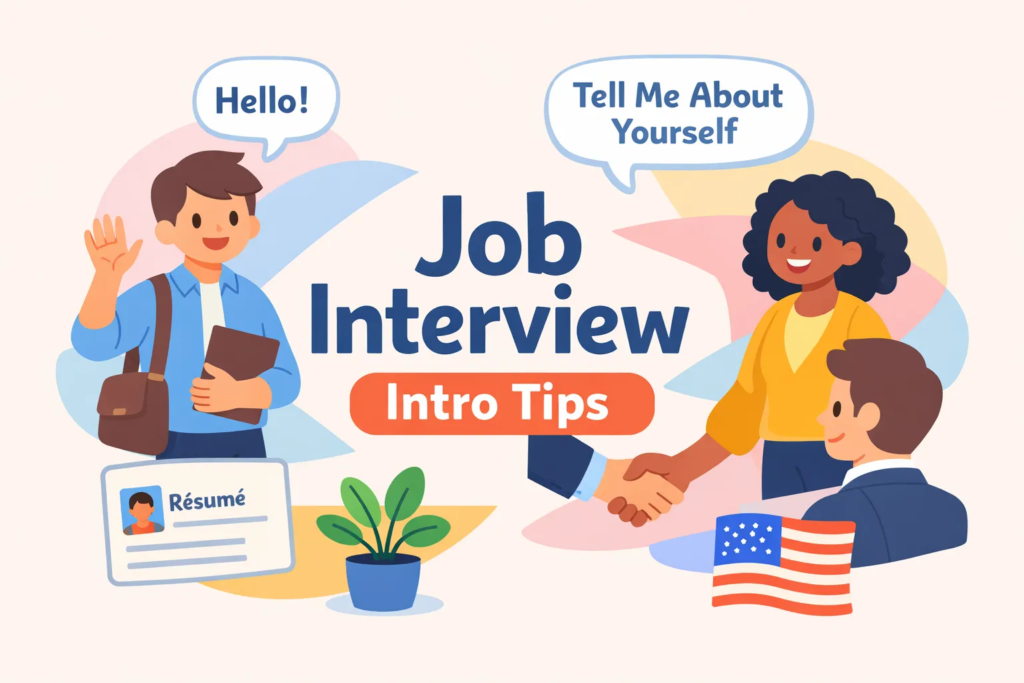
Picture this: you’re in a job interview at an American company. The interviewer leans forward, smiles, and says, “Tell me about yourself.” The room goes quiet. Your mind goes blank. You know the answer is somewhere in your head, but you don’t know where to start, how much to say, or what they’re actually looking for. That feeling is something many ESL learners experience, and it often comes from difficulty handling open-ended questions in English.
By the end of this guide, you’ll know exactly what these questions are, why American professionals rely on them, and how to answer them with real structure and natural-sounding English. You’ll also learn how to ask them yourself, because that skill matters just as much. Here’s how to change that.
What an open-ended question actually is
A closed question limits your answer. “Did you enjoy your last job?” is closed: yes or no, and maybe a quick reason. An open-ended question removes that ceiling. “What did you enjoy most about your last job?” invites you to explain, reflect, and show how you think. Neither format is better in every situation, but in American professional life, open-ended questions signal that the other person genuinely wants your perspective.
The words that signal these questions are consistent: “what,” “how,” “why,” “tell me about,” “walk me through,” and “describe.” Memorize that list. Notice that “Tell me about yourself” is an open-ended prompt even though it doesn’t end with a question mark. Some ESL learners treat it as casual small talk and give a short, vague answer. In a job interview, that’s a missed opportunity. The question is actually asking for a focused, relevant professional summary, not a life story, but not a one-liner either.
The cultural layer matters here. American workplace communication values elaboration, initiative, and showing your reasoning out loud. When a colleague or interviewer asks you an open-ended question, they aren’t just collecting information. They’re watching how you organize your thoughts and communicate under mild pressure. Understanding that completely changes how you should approach these moments.
Open-ended vs. closed questions: a quick comparison
It helps to see the contrast side by side. A closed question like “Did the project succeed?” gets you a yes or no. An open-ended version, “What made that project successful?”, gets you a story, a process, and a window into how someone thinks. In professional settings, the open-ended version almost always gives you more useful information. That’s exactly why American managers, interviewers, and clients use these conversational prompts so consistently.
Why these questions define job interviews and business conversations
Interviewers at American companies use open-ended questions because a one-word answer can’t reveal what they actually need to see. They want to understand your problem-solving process, how you handle conflict, and whether your values fit the team. They’re not just evaluating facts, they’re evaluating your judgment, communication style, and overall fit. For ESL learners, this is often the biggest insight: the content of your answer matters, but so does the confidence and structure you bring to it.
Open-ended questions aren’t limited to interviews, either. They show up in performance reviews, client calls, team meetings, and networking conversations. Consider these two examples from a real meeting:
- Manager to a team member: “How did that project go?”
- Client to a consultant: “What’s your take on our current process?”
Both of those are invitations to elaborate, not just report. Recognizing this pattern turns ordinary workday interactions into opportunities to demonstrate competence and build professional relationships. The more you train yourself to see open-ended questions as invitations rather than pressure, the more natural your responses become.
The most common open-ended questions you’ll face at work
Knowing the most frequent prompts in advance takes a significant amount of stress out of the equation. Here are the ones that come up again and again in American job interviews, organized by type.
Background and motivation questions
“How to Introduce Yourself in an American Job Interview,” “Why do you want this job?”, and “What are your greatest strengths?” Each one is asking for something specific. “Tell me about yourself” is not a life story prompt, it’s asking for a tight, relevant professional summary. “Why do you want this job?” is asking whether you understand the role and whether your goals align with it.
Behavioral interview questions
These follow a very recognizable pattern in American interviews. You’ll hear: “Tell me about a challenge you faced at work and how you handled it,” “Describe a time you worked successfully on a team,” and “How do you handle pressure?” All of them are asking for a real story from your past, with a specific outcome. Once you recognize the pattern, the questions stop feeling random.
Beyond the interview room, you’ll encounter open-ended questions daily: “What’s your take on this?”, “How do you see this moving forward?”, and “What would you change about the current process?” These are direct invitations to share your professional perspective. Treating them as traps keeps you quiet. Treating them as opportunities puts you in the conversation.
How to answer open-ended questions with confidence
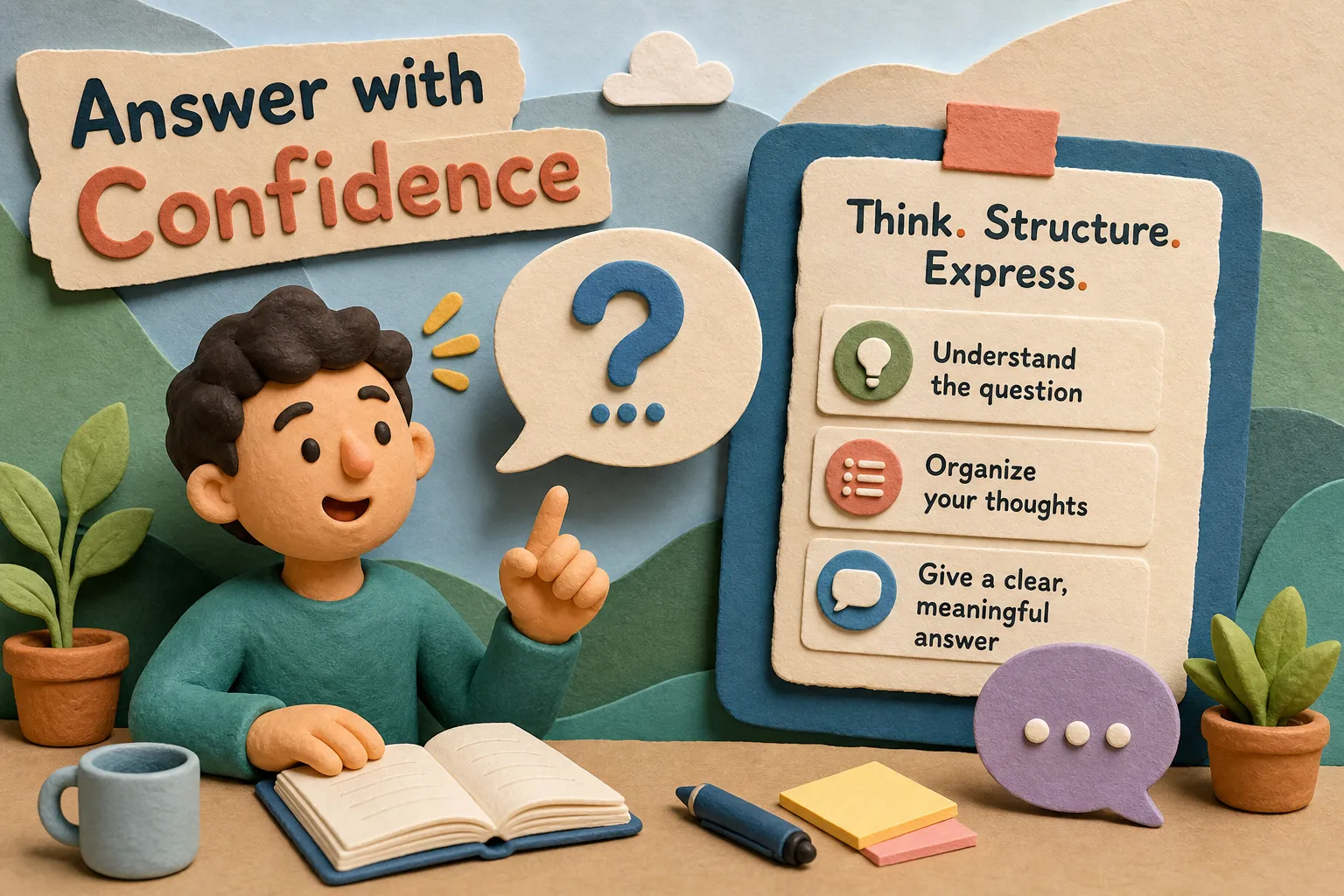
For behavioral questions specifically, the STAR framework gives you a reliable mental structure. STAR stands for Situation, Task, Action, and Result. You briefly set the context (Situation), explain what your responsibility was (Task), describe the specific steps you took (Action), and share the outcome (Result). For an official overview of this approach, see the STAR method for behavioral interviews.
STAR method example
Here’s how it sounds in practice: “In my last role, our team lost a key vendor two weeks before a product launch. My job was to find a replacement fast. I contacted three vendors in 48 hours, negotiated terms, and we launched on schedule.” That’s a brief, complete answer, and it covers all four parts of the framework with room to expand if the interviewer wants more detail.
The specific phrases you use to open your answer matter enormously. Here are natural, native-sounding openers that work in professional settings:
- “Sure, so the situation was…”
- “One example that comes to mind is…”
- “In my last role, I actually dealt with something like this…”
- “Let me think about that for a second.” (this sounds polished, not uncertain)
That last phrase is worth highlighting. Many ESL learners feel that pausing to think signals weakness. In American professional culture, it’s the opposite. In practice, phrasing a pause like “Let me think about that for a second” signals thoughtfulness, it shows you take the question seriously rather than rushing to fill silence.
One of the most common mistakes ESL learners make is giving a one-sentence answer to an open-ended question. It reads as unprepared or disengaged. Career coaches consistently advise aiming for a complete, structured response, detailed enough to demonstrate your thinking, concise enough to stay focused. The opposite mistake is rambling without a clear point. If you use the STAR structure, you naturally avoid both problems: you have something to say, and you know where the answer ends.
How to ask open-ended questions naturally in English
Knowing how to ask these questions is just as valuable as knowing how to answer them. In American workplace culture, asking good questions signals curiosity and genuine engagement. It’s one of the fastest ways to build trust in a professional conversation. Research on how open-ended prompts uncover richer answers can help you understand why these questions work; see this piece on open-ended questions for more context.
Here are specific, natural-sounding prompts for professional settings:
- “What’s been the biggest challenge with this so far?”
- “How is the team feeling about the new direction?”
- “What would make this easier for you?”
- “What’s driving this decision from your perspective?”
When someone gives you an answer and you want to go deeper, probing follow-up questions keep the conversation moving. A short toolkit of phrases does the job: “Can you give me a specific example?”, “What do you mean by that?”, and “How did that affect the outcome?” These phrases signal that you’re listening carefully, not just waiting for your turn to speak. They’re also useful when an interviewer asks you something you’d like to clarify first: “Could you tell me a bit more about what you’re looking for there?” is a completely natural, professional response. For tips on getting richer qualitative responses from open-ended items, check guidance on using open ends for better insights.
How to practice until it feels natural
Reading about open-ended questions helps, but speaking out loud is what actually builds fluency. Try these practice prompts now, record yourself on your phone and play it back.
Practice prompts
- “Tell me about a challenge you overcame at work or school.”
- “What kind of work environment helps you do your best?”
- “Why are you learning English, and what’s your goal?”
- “Describe a time you had to communicate something difficult to someone.”
When you listen back, focus on two things: Did your answer have a clear structure? Did you give enough detail to fully address the question? If the answer feels thin or disorganized, try again with the STAR framework in mind. This kind of self-review is one of the fastest ways to improve.
That kind of structured, real-world practice is what Your Daily American is built around. From job interview simulations to professional conversation lessons, the content is designed so you work through these situations in a step-by-step way, not just read about them. If you’re not sure where to start, the platform offers a free proficiency assessment to help you identify your current level and map out a clear direction for your practice. For additional practice with tough open-ended prompts and sample answers, you might find useful examples in Indeed’s guide to tough open-ended questions.
You now have the tools, use them
Here’s what you’ve covered: open-ended questions invite elaboration, start with words like “what,” “how,” “why,” “walk me through,” and “tell me about,” and are central to how American professionals communicate at work. They appear in interviews, meetings, client calls, and everyday conversations. Answering them well requires structure (the STAR method), natural opening phrases, and the confidence to speak in a complete, developed response without apologizing for taking space.
The mindset shift is just as important as the vocabulary. Every time an interviewer says “Tell me about a time…”, they’re handing you an opportunity. They want to hear you think out loud. They want to understand how you work. That question is not a trap, it’s an invitation. The more you practice responding to it, the more comfortable that invitation feels.
Start with the four practice prompts above and work through each one at least twice. Once you’ve gone through them a couple of times, bring that practice to How to Talk About Achievements in English During a Review, Your Daily American, the lessons pick up exactly where solo practice leaves off, built for the real American professional situations you’ll actually face. For extra support with common phrases and expressions you can use in those answers, see Common American Expressions Every English Learner Should Know, Your Daily American.